Industrial Machinery Assembly: Phases, Integration and Commissioning
What is industrial machinery assembly?
Industrial machinery assembly is the process of fitting, connecting and adjusting every component of a machine or production line until it becomes a functioning system. It is far more than bolting parts together: it requires coordinating mechanical, electrical, pneumatic and hydraulic disciplines under a controlled sequence, with defined tolerances and verifications at each stage.
In a special-purpose machine, assembly typically accounts for 30 % to 40 % of the total project lead time. It is the phase where prior engineering work, CNC machining of components and fabrication of welded assemblies all converge. An assembly error can invalidate the work of every preceding phase, making this stage a critical quality checkpoint.
At MECVIL, our assembly department has a capacity of 5,000 hours/month of combined mechanical and electrical assembly, spread across dedicated areas within our 10,500 m² facilities. This volume allows us to run several special machinery projects simultaneously with dedicated teams.
Phases of industrial machinery assembly
The assembly of an industrial machine is structured in sequential phases. Each has specific objectives, tooling and quality controls:
| Phase | Scope | Verification |
|---|---|---|
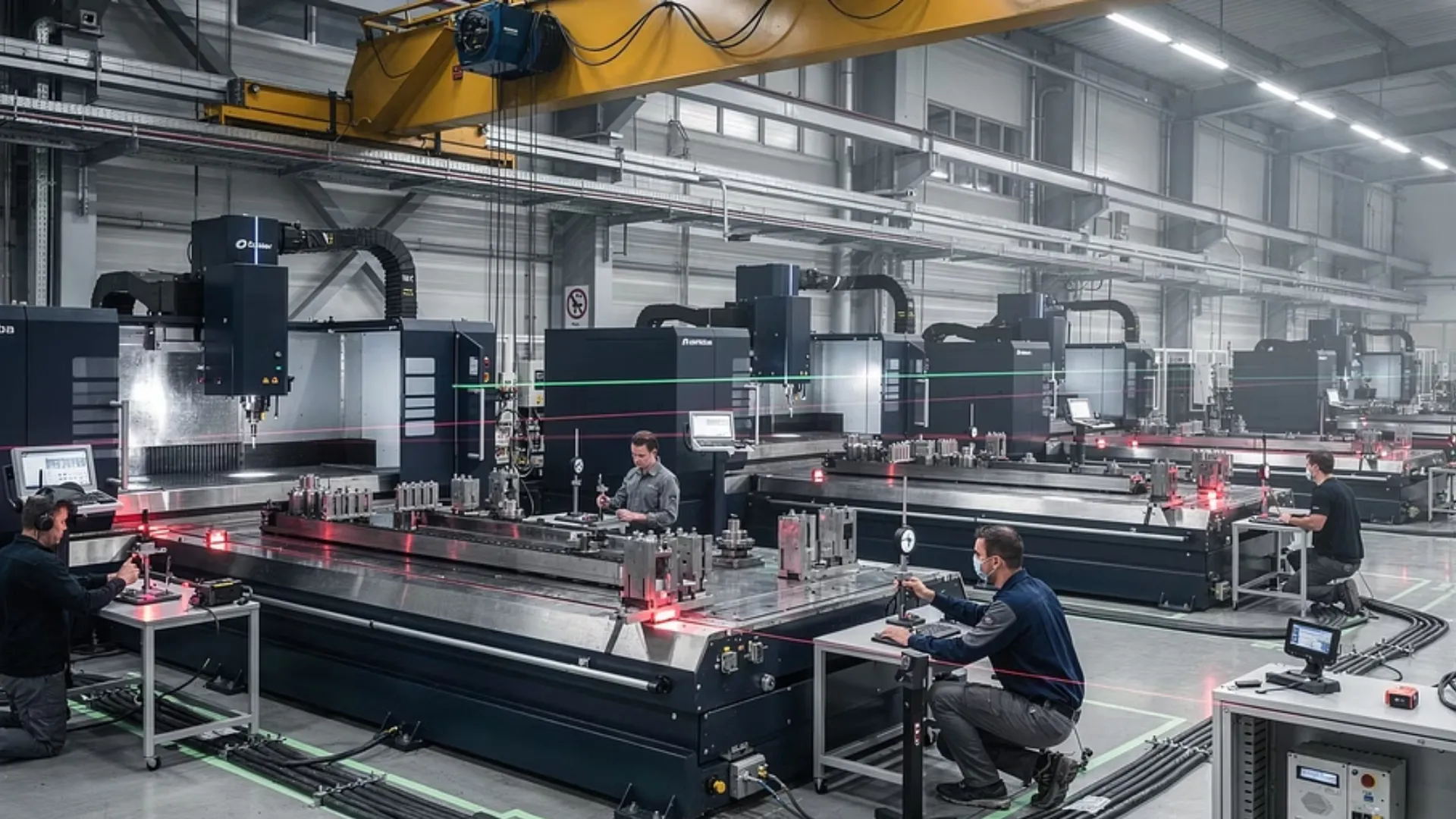
| Mechanical assembly | Fitting of beds, frames, linear guides, ball screws, transmissions and mechanical sub-assemblies. Adjustment of dimensional and geometric tolerances | Laser alignment, dimensional inspection with calibrated instruments |
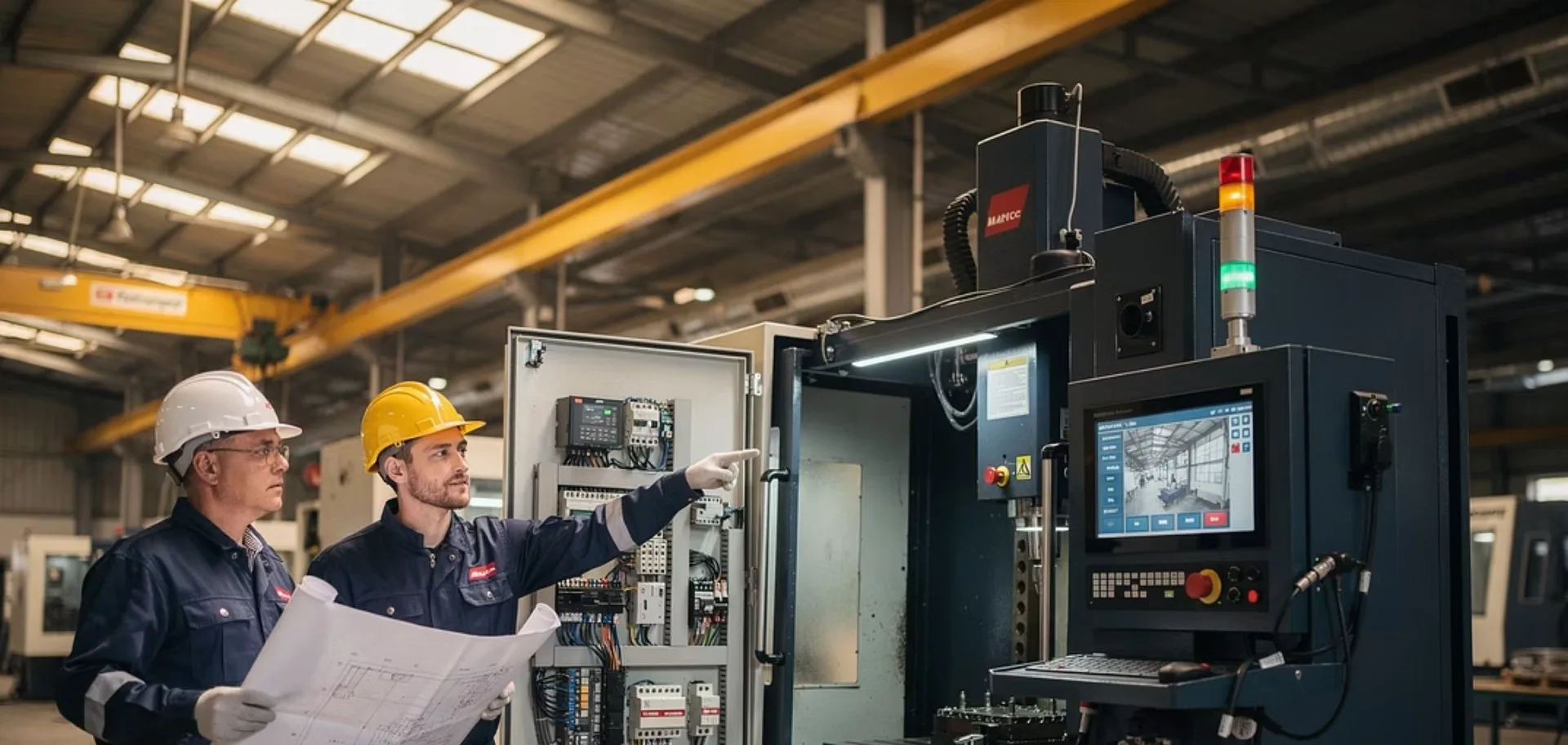
| Electrical assembly | Power and control wiring, installation of electrical panels, connection of motors, drives and sensors per EPLAN schematics | Continuity, insulation and polarity checks. IEC 60204-1 compliance |
| Pneumatic assembly | Installation of actuators, valves, filter-regulator-lubricator (FRL) units, fittings and tubing. Compressed-air circuits | Leak testing, working-pressure verification |
| Hydraulic assembly | Hydraulic power units, cylinders, manifolds, filtration, cooling and lubrication circuits | Pressure testing, leak control, flow-rate verification |
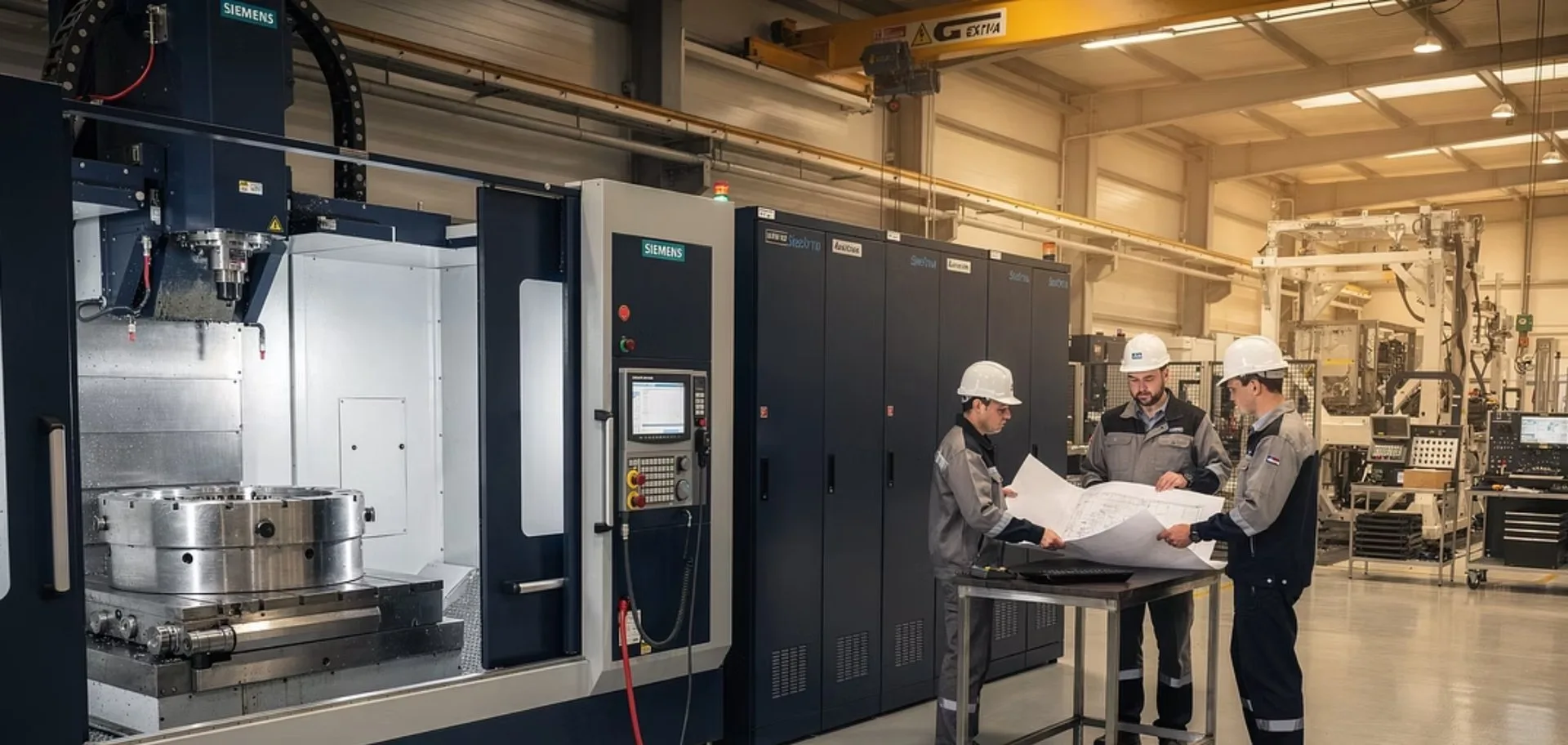
| Commissioning | PLC and HMI programming, drive parameterisation, robot and machine-vision configuration, cycle tuning, FAT testing | Full functional verification, cycle-time validation, FAT protocol with the client |
At MECVIL each phase is carried out by specialist personnel. The transition between phases follows an internal acceptance protocol in which the outgoing team signs off on the conformity of their work before the next team begins.
Do you need to assemble a complete machine or production line?
Consult our assembly team and we will present a phase, timeline and resource plan tailored to your project.
Electromechanical assembly: systems integration
Electromechanical assembly is the discipline that bridges the mechanical world with the electrical and control domains. In a modern machine, mechanical components do not operate in isolation: every actuator responds to a PLC signal, every sensor feeds a control loop and every robot synchronises with the rest of the line.
Systems integration at MECVIL covers the installation and commissioning of technologies such as:
- Industrial robotics: integration of ABB and DENSO robots in handling, welding and palletising cells
- Cobots: Universal Robots (UR) collaborative robots for assembly stations where operator and machine share the workspace
- Machine vision: Cognex systems for quality inspection, robot guidance and in-line dimensional verification
- Centralised control: PLC programming (Siemens, Omron, Panasonic, Mitsubishi) and HMI screens for single-point management of the entire machine
The key to electromechanical assembly is consistency between the electrical and mechanical designs. When both disciplines are executed by the same team — as is the case with our electrical engineering service — the interface incompatibilities that arise when multiple suppliers are involved are eliminated.
When should you outsource machinery assembly?
Outsourcing assembly makes sense when one or more of the following conditions apply:
- Multi-disciplinary complexity: the machine integrates mechanics, electrics, pneumatics, hydraulics and control software. Coordinating 4 or 5 specialities internally requires a dedicated management team that is not always available
- Hour volume: assembling a special-purpose machine can require between 2,000 and 10,000 hours. Absorbing that peak workload with permanent staff means temporary hiring, with the associated learning curve and quality risks
- CE responsibility: under Machinery Directive 2006/42/EC, whoever assembles a complete machine is deemed the manufacturer and assumes conformity responsibility. Outsourcing to an integrator experienced in CE marking transfers that responsibility to a party with the proven ability to fulfil it
- Infrastructure: assembling large-format machines requires overhead cranes, levelled floors, industrial power supply and sufficient space. Not all plants have these conditions
Conversely, if the assembly is limited to a simple jig or a mechanical sub-assembly with no electrical integration, in-house execution is usually more efficient.
Machinery assembly at MECVIL
At MECVIL, assembly is not an isolated phase: it is part of an integral 360° project in which the same organisation designs, machines, assembles, wires, programmes and commissions. This verticality eliminates supplier interfaces and guarantees technical consistency from start to finish.
Our assembly capabilities include:
- 5,000 h/month of combined mechanical and electrical capacity
- +110 professionals, including +30 mechanical and electrical engineers
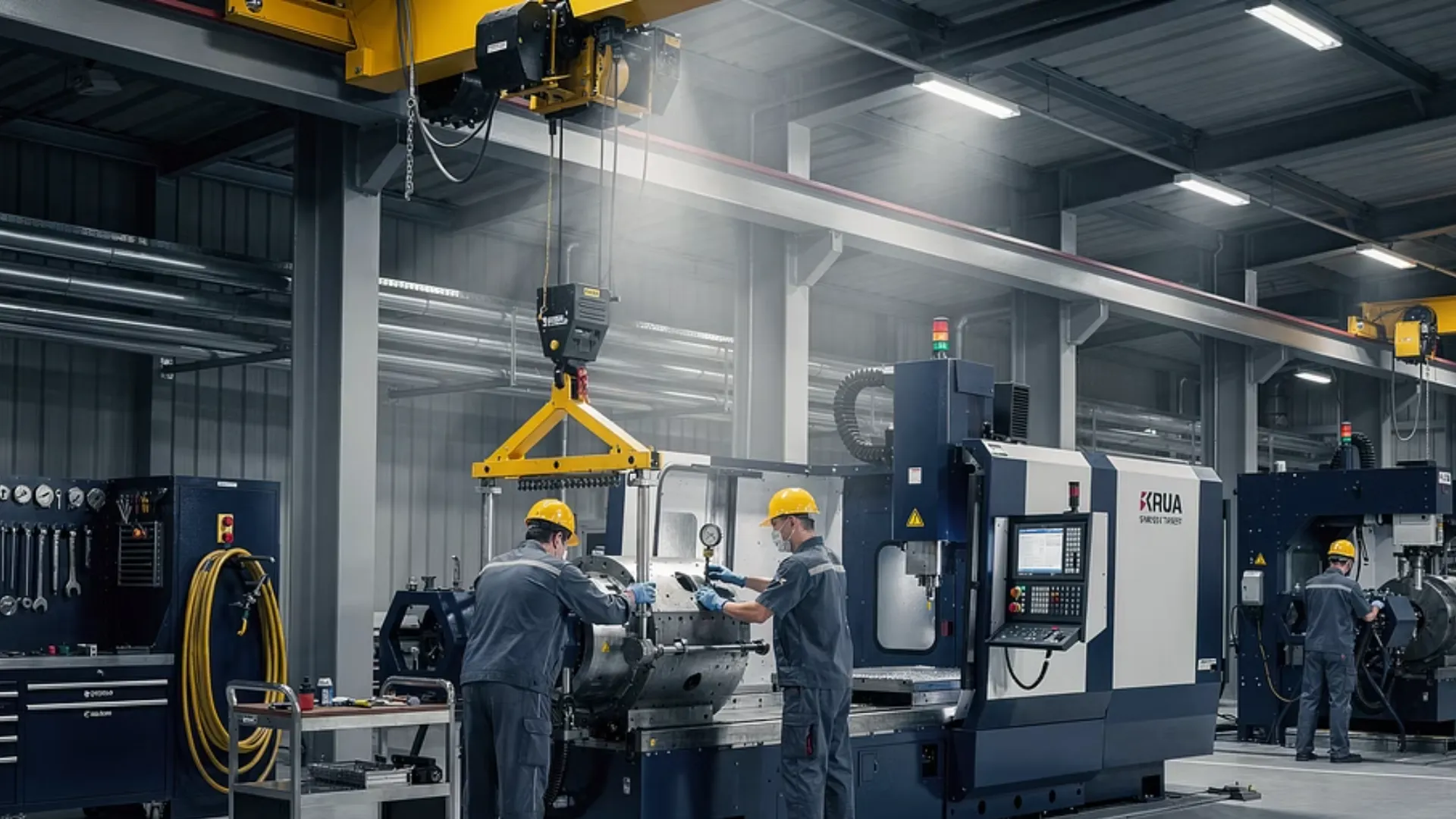
- 10,500 m² of facilities with dedicated assembly areas, overhead cranes and test benches
- Integration of ABB and DENSO robots and Universal Robots cobots
- Cognex machine-vision systems (Deep Learning, AOI)
- Full FAT testing at our facilities before shipment
- ISO 9001 certification with traceability at every assembly stage
The result is a machine that arrives at the client's plant tested, documented and ready for on-site commissioning (SAT). This turnkey project model reduces the risks of fragmented integration and compresses delivery lead times.
Looking for an industrial partner for the assembly of your next machine?
Contact MECVIL and we will jointly analyse the scope, phases and schedule of your project.