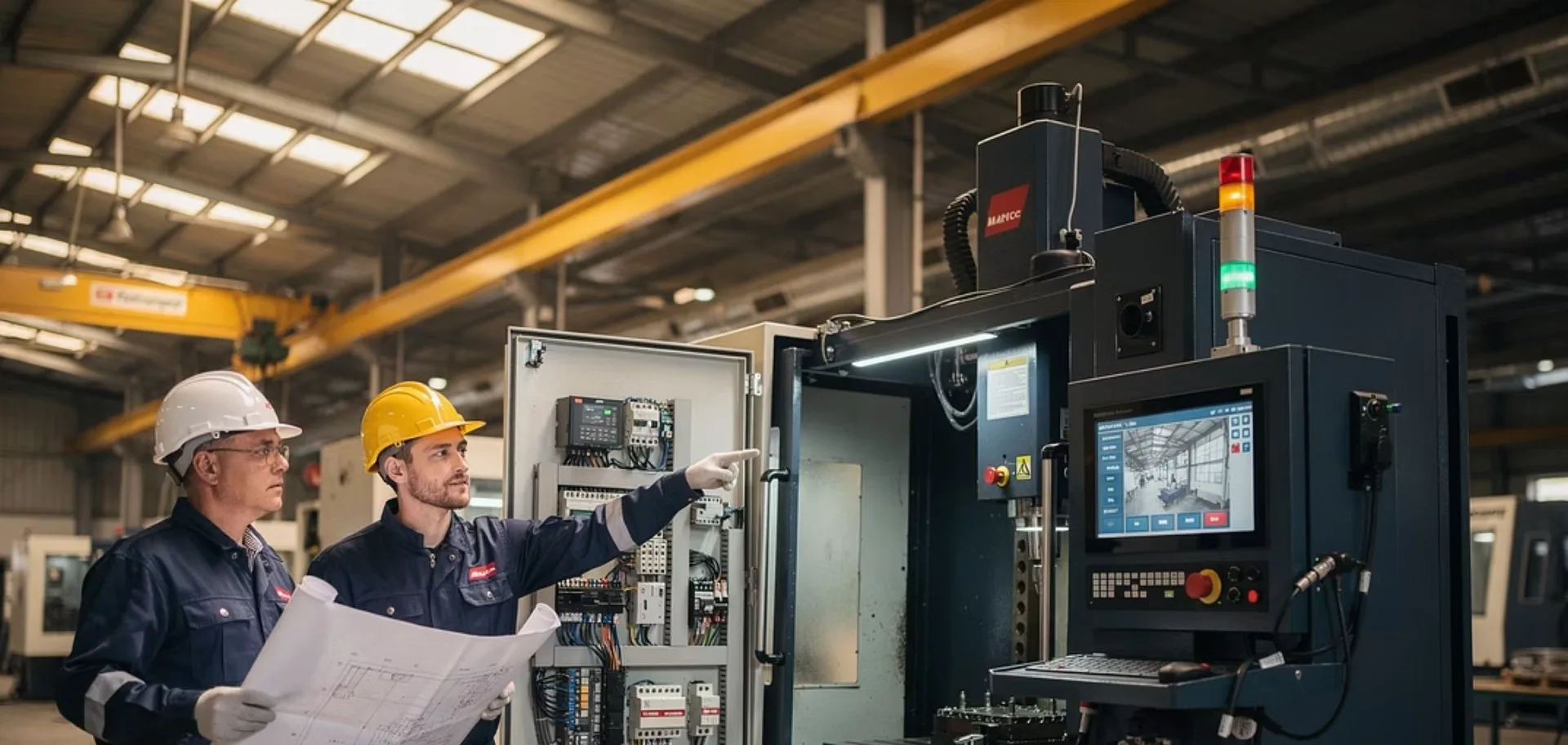
Turnkey projects in industrial machinery manufacturing
What is a turnkey project in industrial manufacturing?
A turnkey project is one in which a single manufacturer assumes full responsibility for every phase: from conceptual engineering through to commissioning and the delivery of a fully operational system. The client receives the machine or production line ready to run, with no need to coordinate multiple suppliers.
In the context of special machinery manufacturing, a turnkey project involves integrating highly diverse disciplines — mechanical engineering, CNC machining, electromechanical assembly, PLC programming, machine vision — under a single management structure. It is a model that reduces risk, compresses lead times and simplifies communication.
At MECVIL we have spent over 50 years delivering integral 360° projects that cover the entire lifecycle: engineering, manufacturing, installation, commissioning, technical support, spare parts supply and maintenance.
Phases of a turnkey project
An industrial machinery turnkey project is structured in sequential phases, each with defined deliverables:
- 1.Conceptual engineering: analysis of the client's requirements, functional definition of the machine, feasibility study and initial cost and timeline estimates
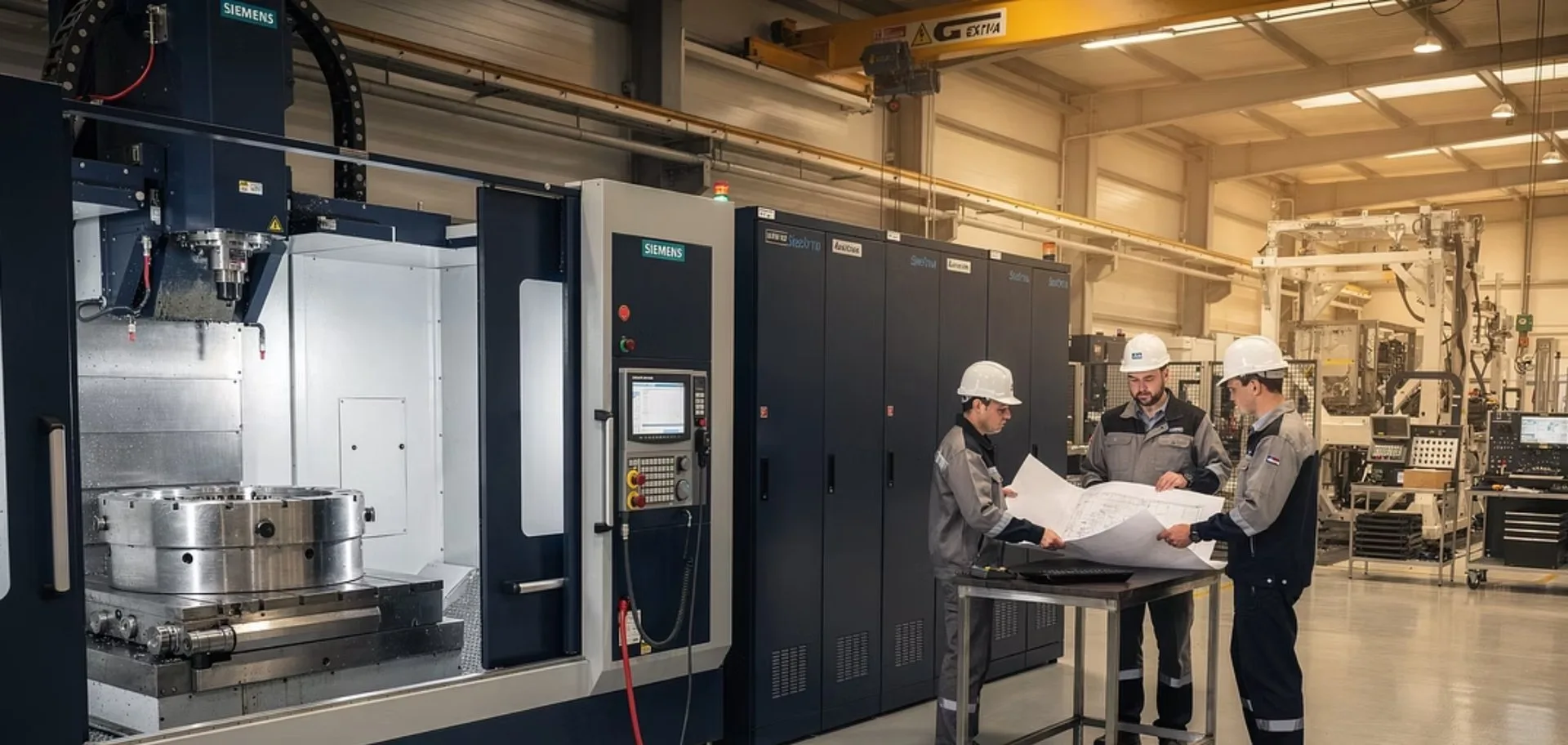
- 2.Detailed engineering: 3D CAD design, FEA simulation, electrical schematics (EPLAN, See Electrical), selection of power and control components
- 3.Procurement: purchasing of materials, standardised components, motors, PLC, sensors. A single point of contact manages the entire supply chain
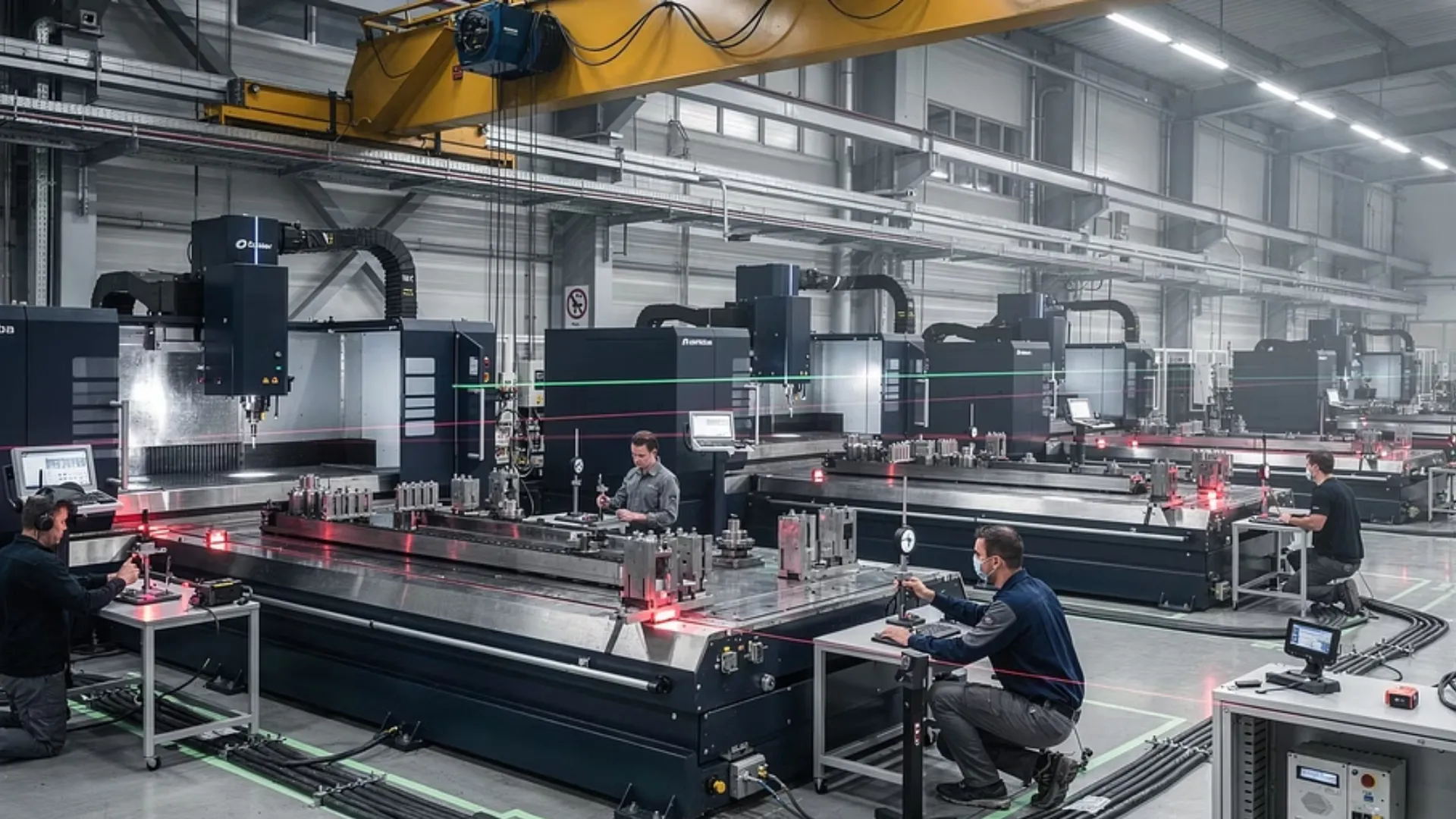
- 4.Mechanical fabrication: CNC machining of beds, tooling and structures, welding of assemblies, surface treatments
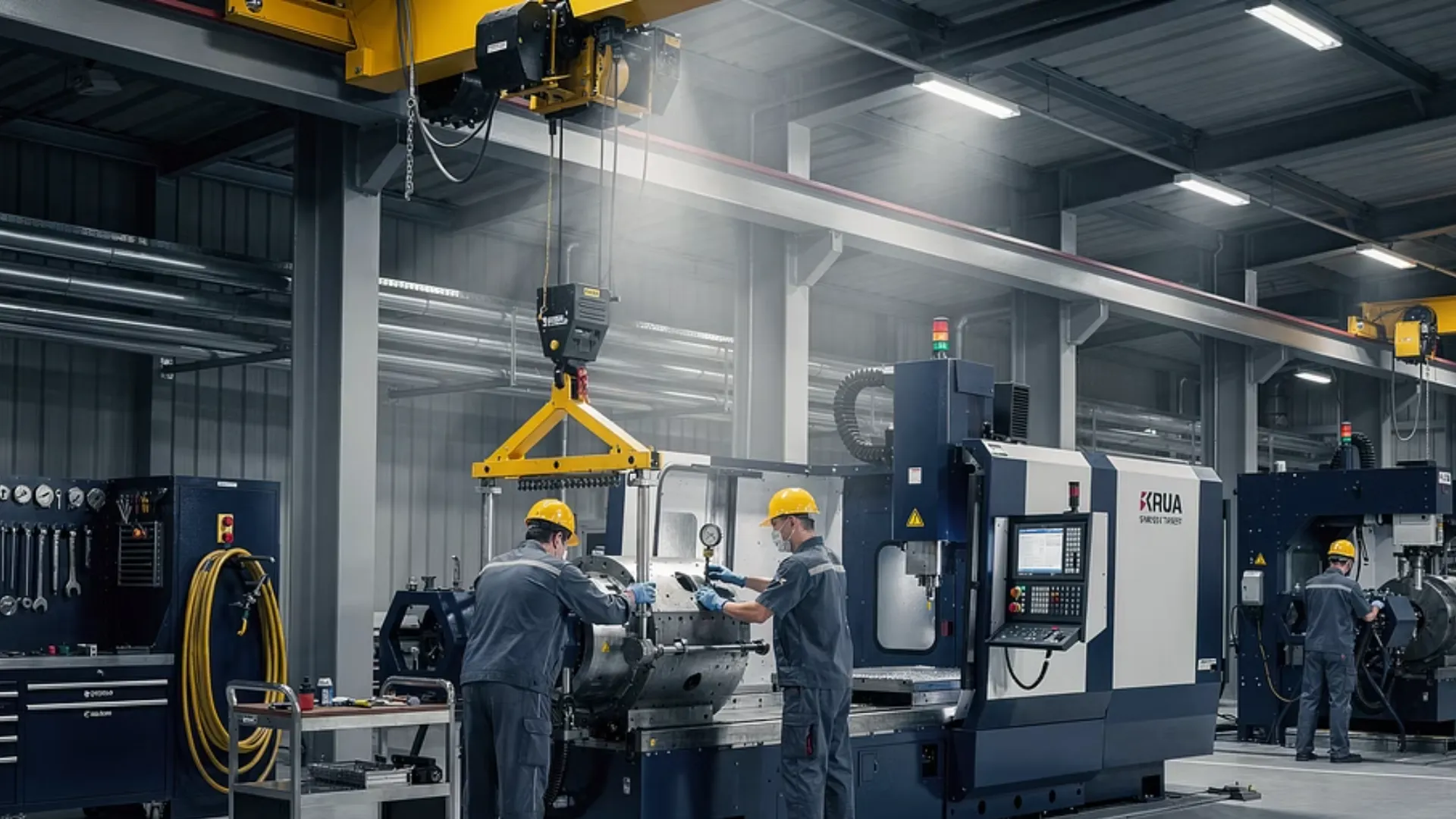
- 5.Electromechanical assembly: mechanical, electrical, pneumatic and hydraulic assembly of the complete machine at our facilities
- 6.Electrical integration and programming: wiring, PLC and HMI programming, robot configuration, machine vision system calibration
- 7.Factory acceptance testing (FAT): functional validation of the machine at our facilities before shipment, with the client present to verify compliance with specifications
- 8.Transport and installation: logistics to the client's plant, unloading, positioning and connections
- 9.Site acceptance testing (SAT): fine-tuning under real production conditions, validation with the client's parts, operator training
At MECVIL we execute all 9 phases under one roof, with a team of +110 professionals across 10,500 m² of specialised facilities.
Do you have a machinery project that requires integrated management?
Request a technical consultation and we will jointly analyse the phases, timelines and budget.
Advantages of the turnkey model over fragmented subcontracting
When a project is split among multiple suppliers — one for engineering, another for machining, a third for assembly and a fourth for programming — risks multiply. The turnkey model offers concrete, measurable advantages:
Cost and lead time reduction
Industry data indicate that consolidated manufacturing with a single supplier can reduce costs by up to 30 % and compress lead times by 20 % to 50 % compared with fragmented subcontracting (PCBSun, Whip Industries, 2025). The primary source of savings is the elimination of coordination costs: according to CAPS Research, the average cost of processing a single purchase order in manufacturing is 411 dollars.
Single point of responsibility
With a single point of contact, coordination problems between suppliers disappear: who is responsible for a delay, who bears the cost of a defect at the interface between mechanical design and electrical wiring, who answers for a failure during commissioning.
Integrated CE responsibility
Under the Machinery Directive 2006/42/EC (transposed in Spain by Royal Decree 1644/2008), whoever assembles a set of machines into a complete system is deemed the manufacturer of the assembly and assumes full responsibility for CE conformity. In fragmented projects, this responsibility falls into a grey area. In a turnkey project, the integrator assumes it clearly.
Technical coherence
When the same team that designs the machine also machines, assembles, wires and commissions it, technical decisions are coherent from start to finish. There are no divergent interpretations of the design or incompatibilities between phases.
When does a turnkey project make sense?
The turnkey model is particularly advantageous when:
- The project integrates multiple disciplines (mechanical + electrical + software + robotics)
- A complete machine or production line is needed, not an isolated component
- The client does not have an in-house engineering team with the capacity to coordinate 4–5 different suppliers
- Deadlines are critical and delays caused by lack of coordination between subcontractors cannot be tolerated
- The project must comply with CE regulations as a complete system, not as the sum of individual parts
Conversely, if the project consists of an individual machined part or simple tooling, direct subcontracting of CNC machining may be more efficient.
How MECVIL delivers turnkey projects
Our turnkey project capability rests on the vertical integration of 6 specialised services:
| Phase | MECVIL Service | Capabilities |
|---|---|---|
| Design | Engineering | 3D CAD, FEA simulation, prototyping |
| Fabrication | Machining | CNC up to 20 m, 5-axis, large-dimension |
| Assembly | Assembly | Mechanical, electrical, pneumatic, hydraulic |
| Automation | Electrical | PLC Siemens/Omron/Mitsubishi, robots, machine vision |
| Integrated management | Global Projects 360° | Coordination, quality, timelines, budget |
| Support | Maintenance | Technical support, spare parts, training |
This integration has enabled us to deliver projects of high technical complexity: FMS lines with up to 5 robots and machine vision, robotic welding stations, automatic inspection machines and assembly lines with 12 semi-automatic stations.
Criteria for choosing a turnkey project partner
Not every manufacturer can take on a turnkey project with guarantees. Evaluate these criteria before deciding:
- Vertical integration: does the company manufacture and assemble in its own facilities, or does it subcontract critical phases?
- Dimensional capacity: can it machine the largest parts in the project? MECVIL handles workpieces of up to 20 metres.
- Electrical and automation expertise: does it programme PLC, integrate robots and calibrate machine vision?
- Certifications: ISO 9001 for quality management, CEPYME500 and EcoVadis, plus quality-controlled welding for metal structures
- Multidisciplinary team: does it have mechanical, electrical and automation engineers under one roof?
- Project track record: request references for similar projects in terms of complexity and sector
At MECVIL, the 6 services that make up a turnkey project are executed at our facilities in Sallent (Barcelona), with a team of +110 professionals and over 50 years of experience in industrial manufacturing across 13 sectors. We apply lean manufacturing principles to optimise every phase of the project and reduce waste in time and materials.
Looking for a manufacturer to manage your machinery project from start to finish?
At MECVIL we offer turnkey projects with engineering, CNC machining, assembly, automation and commissioning under one roof. Contact our technical team to explore your project.