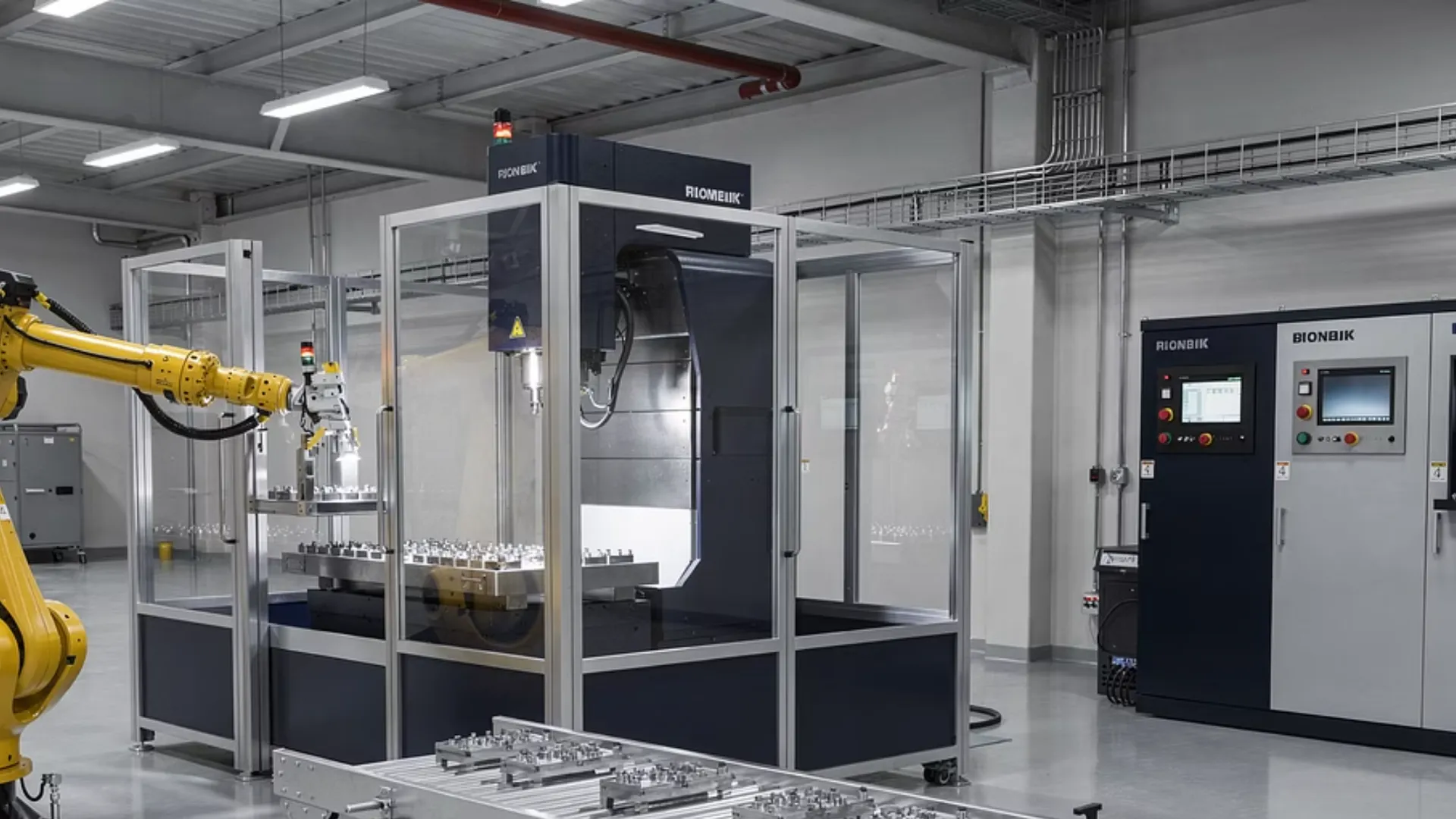
Industrial Automation: Components, Standards and Integration Guide
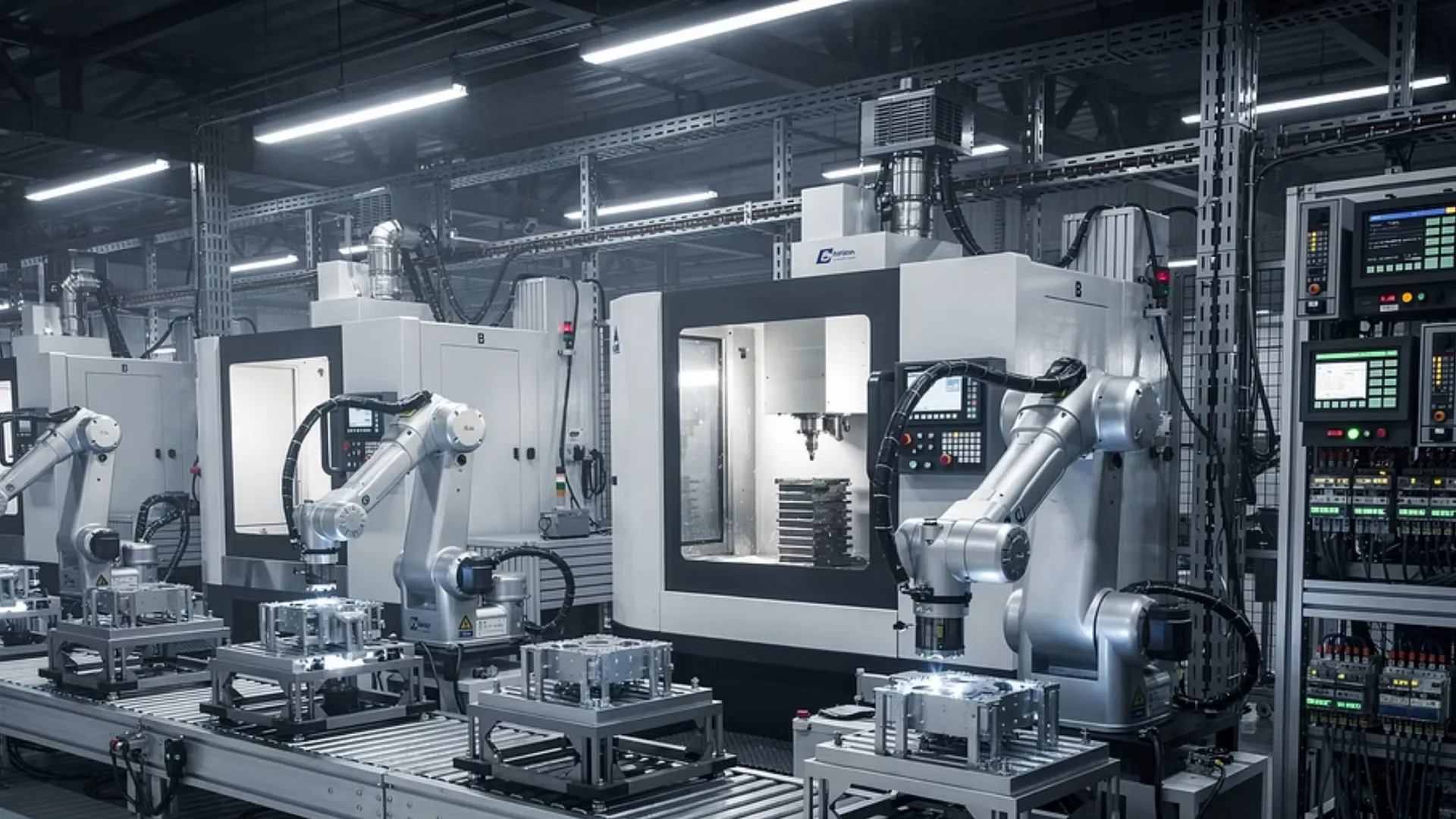
The global industrial automation market is valued at 272 billion dollars in 2025, with an annual growth rate of 9.8%. Europe accounts for 33% of this market. Across the continent, the installed base of industrial robots exceeds 580 000 units and cobots now represent 30% of new installations. Behind these figures, industrial automation constitutes the nervous system of every special purpose machine and every automated production line.
What is industrial automation
Industrial automation encompasses the set of techniques and technologies that enable commanding, regulating and supervising manufacturing processes without continuous human intervention. It relies on an architecture of interconnected components:
- Programmable logic controller (PLC) — the brain of the machine, executing the control programme
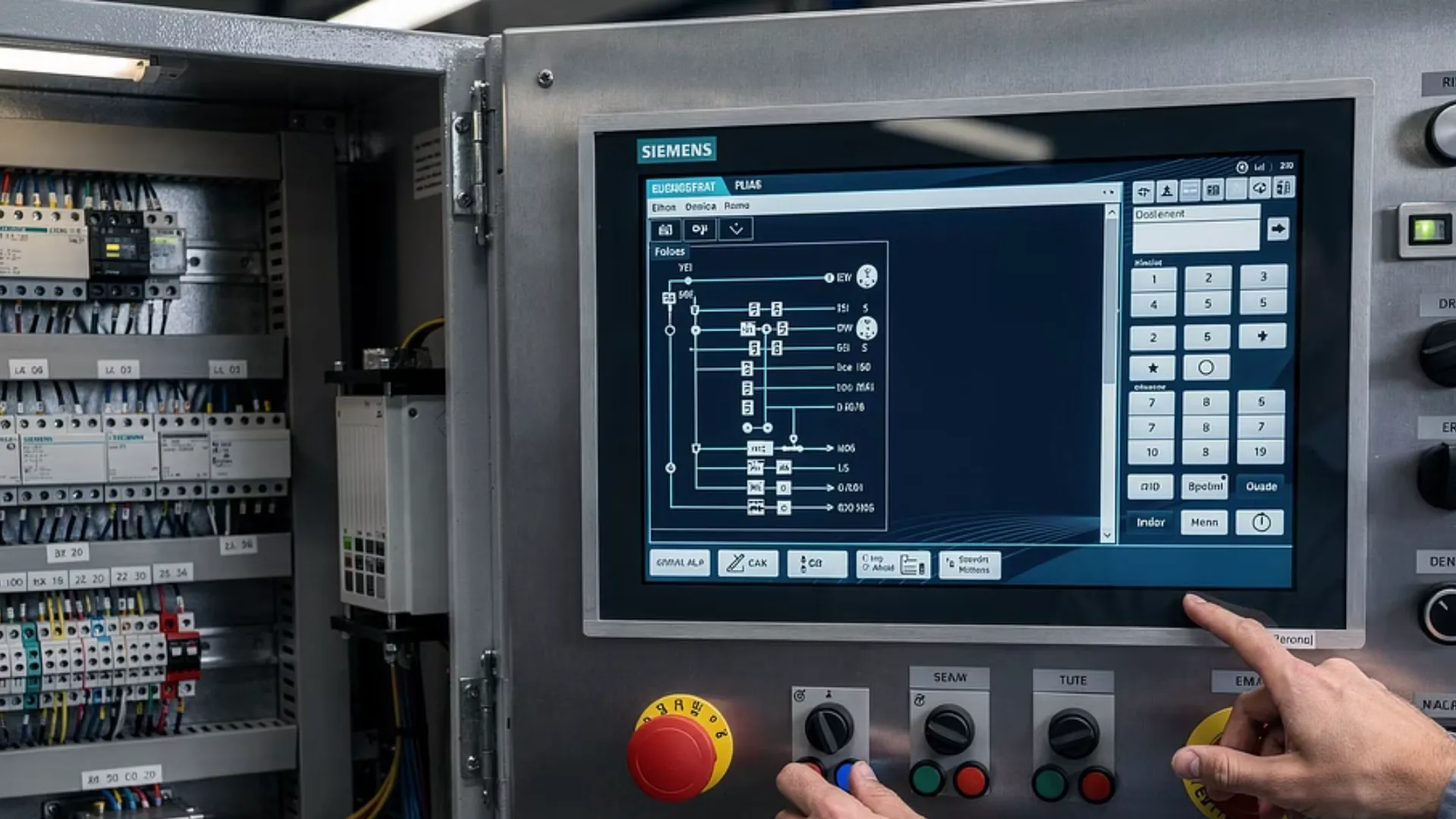
- Human-machine interface (HMI) — the supervision and parameter-setting screen for the operator
- Sensors and actuators — the eyes and muscles of the system (detectors, servomotors, cylinders)
- Communication network — the fieldbus connecting all components (Profinet, EtherCAT)
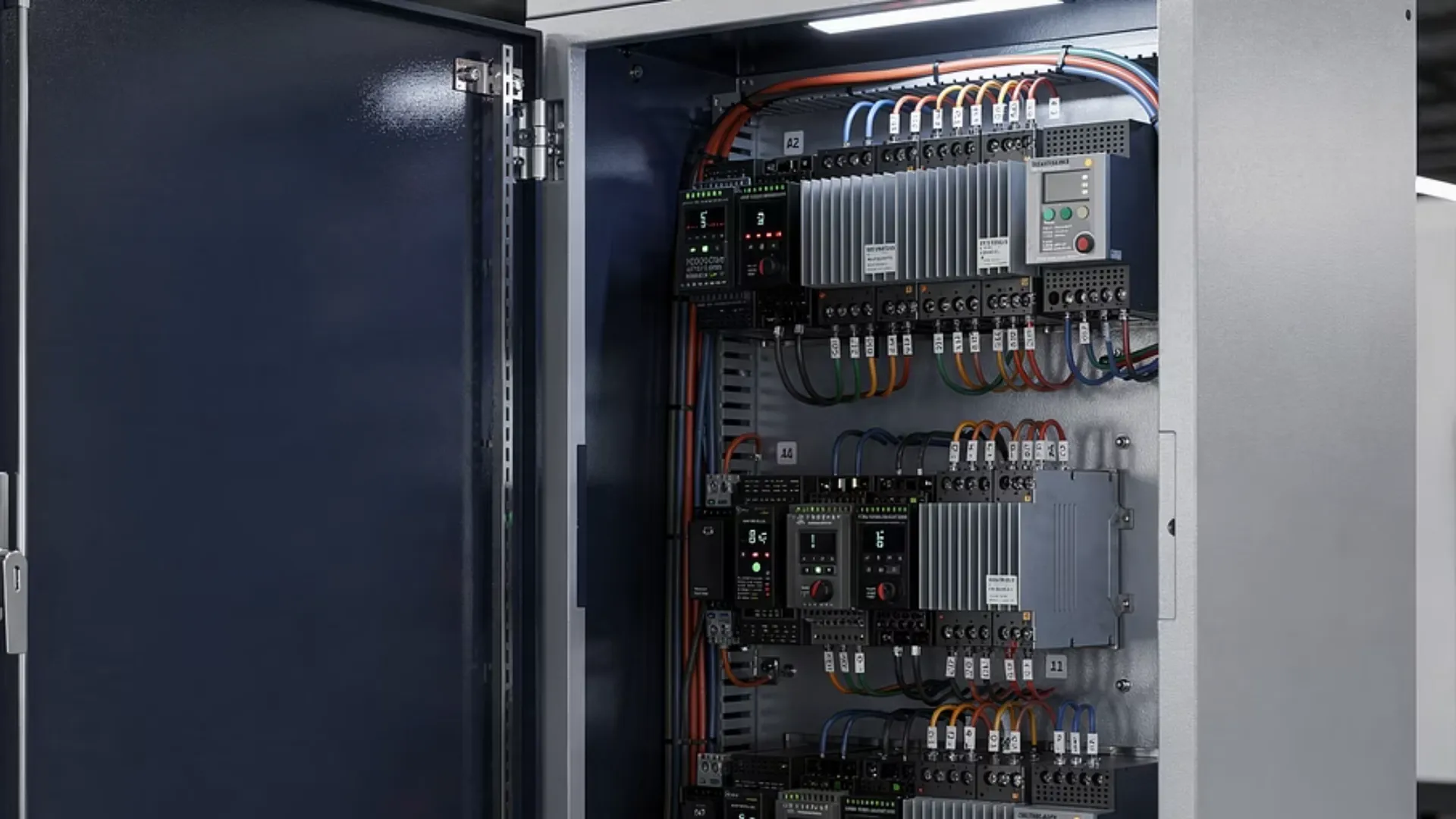
- [Electrical control panel](/en/noticias/cuadros-electricos-industriales) — the enclosure housing the PLC, protections, drives and power supplies
Industrial automation operates at every level of the ISA-95 pyramid: from local sensor control through to global plant supervision.
Key components of industrial automation
Programmable logic controllers (PLC)
The PLC is the central component of any industrial automation system. The IEC 61131-3 standard defines five standardised programming languages: Ladder Diagram (LD), Function Block Diagram (FBD), Structured Text (ST), Sequential Function Chart (SFC) and Instruction List (IL).
The leading brands deployed in industry include Siemens (S7-1200, S7-1500), Omron (NX/NJ), Panasonic (FP-X), Mitsubishi (iQ-R/F) and Schneider Electric (Modicon). The choice depends on the sector, the specification and the end customer's preferences.
Human-machine interfaces (HMI)
HMIs allow the operator to visualise the process state, modify production parameters and review alarms. They range from simple touchscreen panels (Siemens, Omron, Proface) to SCADA systems for centralised supervision of multiple machines.
Robotics and cobotics
The integration of industrial robots (ABB, DENSO, KUKA, Fanuc) and cobots (Universal Robots, OMRON TM) is now a standard component of industrial automation. Across Europe, cobots accounted for 30% of new installations in 2025, compared with 10% in 2019.
Drives and servomotors
Variable frequency drives (VFDs) control the speed of asynchronous motors. Servomotors deliver position, speed and torque control with superior precision — essential for CNC machine axes and Pick & Place systems.
Standards and regulations for industrial automation
The regulatory framework for industrial automation is structured around several key references:
| Standard | Scope | Application |
|---|---|---|
| IEC 61131-3 | PLC programming languages | Standardised multi-brand programming |
| EN 60204-1 | Electrical safety of machinery | Panel design, wiring, EMC |
| IEC 62443 | Industrial systems cybersecurity | OT protection of connected machines |
| ISO 13849-1 | Functional safety (PLr) | Safety-related parts of control systems |
| IEC 61508 | Functional safety (SIL) | Programmable electrical/electronic systems |
| Regulation (EU) 2023/1230 | New machinery regulation (replaces Directive 2006/42/EC) | CE marking, conformity assessment |
Cybersecurity is becoming a critical concern: the IEC 62443 standard, recognised as a horizontal standard by the IEC in 2021, now applies to all cyber-physical systems, not solely to industrial control systems.
Looking for an industrial automation integrator?
Request a quotation — our team programmes PLCs from Siemens, Omron, Panasonic and Mitsubishi.
Why outsource industrial automation
Automation integration demands multidisciplinary expertise: electrical engineering, programming, mechanics, networking and safety. Building these competencies in-house represents a considerable investment in recruitment and training.
Benefits of outsourcing:
- Access to specialised expertise — certified PLC programmers, robotics integrators, machine vision specialists
- Flexibility — project-based engagement without committing to permanent headcount
- Multi-brand capability — an independent integrator works with all PLC brands without vendor lock-in
- Regulatory compliance — the integrator ensures adherence to EN 60204-1, IEC 62443 and CE marking requirements
- Commissioning and training — programming, FAT/SAT testing, operator training and documentation
The trend towards modular automation enables SMEs to automate progressively, station by station, without a massive upfront investment. An integrator supports this approach with a scalable architecture.
Industrial automation trends in 2026
Industrial automation is evolving rapidly. The major trends for 2026:
- 1.Artificial intelligence in production — 98% of manufacturers are exploring AI for automation, yet only 20% are fully prepared to deploy it at scale. AI applies to quality control via machine vision, predictive maintenance and process optimisation.
- 1.Widespread cobotics — cobots (Universal Robots, OMRON TM) integrate into manual workstations without safety cages, delivering rapid return on investment for repetitive tasks.
- 1.OT cybersecurity — IT/OT convergence compels machine builders to embed security from the design stage (Security by Design), in accordance with IEC 62443.
- 1.Edge computing — data processing moves closer to the machine, reducing latency and cloud dependency for real-time applications.
- 1.Digital twins — virtual simulation of PLCs and production lines accelerates fine-tuning and reduces commissioning risks.
Industrial automation and special purpose machine building
Industrial automation is not conceived in isolation. It integrates within a mechanical, electrical and software assembly that constitutes the special purpose machine. This is why OEMs and end users seek partners capable of managing the entire value chain.
MECVIL maintains an electrical and electronic engineering department with 1 500 hours per month of engineering capacity. We programme PLCs from all major brands: Siemens, Omron, Panasonic and Mitsubishi. Our engineers design electrical schematics using EPLAN and See Electrical, integrate industrial robots (ABB, DENSO), cobots (Universal Robots) and machine vision systems (Cognex with Deep Learning).
What sets MECVIL apart is complete vertical integration. Under one roof spanning 10 500 m2 in Sallent (Barcelona), we combine:
- [Engineering](/en/servicios/ingenieria) — 3 000 h/month of mechanical and electrical design
- [Industrialisation](/en/servicios/industrializacion) — manufacture of automated lines for OEMs
- [CNC machining](/en/servicios/mecanizado) — 5 000 h/month, milling up to 20 metres
- [Electromechanical assembly](/en/servicios/montaje) — 5 000 h/month, complete integration
- Automation and electrical — 1 500 h/month, multi-brand programming
Over 110 professionals, including 30+ engineers, deliver turnkey projects — from feasibility study through to on-site commissioning, including FAT testing and operator training.
Have an industrial automation project? Contact MECVIL for an obligation-free quotation. ISO 9001 certified, 50 years of experience and integrated capability from engineering to delivery.