Servo Motors and Variable Frequency Drives: Guide for Industrial Machinery
What is an industrial servo motor
An industrial servo motor is a high-precision electric actuator that controls the position, speed and torque of a shaft with accuracy far exceeding that of a conventional motor. Unlike standard asynchronous motors, servo motors incorporate an encoder (absolute or incremental) that continuously feeds back the actual shaft position to the controller, closing the control loop.
This closed-loop control capability makes the servo motor the essential component of any application requiring precise, synchronised movements or rapid speed changes. In industrial settings, servo motors are used in positioning systems, dosing, flying cut-off, high-throughput palletising and any machinery where repeatability is critical.
At MECVIL we integrate servo motors into special-purpose machinery through our electrical engineering department. Our team of more than 30 engineers selects, sizes and programmes servo drives from the leading manufacturers, tailoring them to each customer's specific process.
Servo motors vs variable frequency drives
Both servo motors and variable frequency drives (VFDs) control electric motors, but their application scope differs. The following table summarises the key differences:
| Criterion | Servo motor + servo drive | Asynchronous motor + VFD |
|---|---|---|
| Position control | Yes, with high-resolution encoder | Not native (possible with external encoder, limited precision) |
| Speed accuracy | ±0.01 % | ±0.5 % typical |
| Low-speed torque | Rated torque available from 0 rpm | Reduced torque at low speeds (without forced ventilation) |
| Dynamic response | Milliseconds (high acceleration/deceleration) | Tens of milliseconds |
| System cost | Higher (motor + drive + encoder + dedicated cables) | Lower (standard motor + VFD) |
| Typical application | Positioning, interpolation, axis synchronisation | Pumps, fans, conveyors, agitators |
| Maintenance | Brushless motor, minimal maintenance | Motor with standard bearings, conventional maintenance |
The choice between the two is not a matter of quality but of process suitability. A VFD is the optimal solution when speed regulation is required without precise positioning, such as in pumps, fans or conveyor belts. A servo motor is indispensable when the application demands position control, multi-axis synchronisation or speed changes within milliseconds.
When to use servo motors
Investment in servo motors is justified when the process presents one or more of the following requirements:
- Repetitive positioning: the machine must place a shaft in an exact position with tolerances below 0.01 mm, as in part-feeding systems, verification stations or machining heads.
- Multi-axis synchronisation: flying cut-off, continuous packaging or printing operations requiring two or more axes to move in real-time coordination.
- Complex motion profiles: sequences with variable accelerations, speeds and positions within a single cycle, as in packaging machines, dosing equipment or assembly machines.
- High throughput with format changes: production lines assembling multiple references that need to adjust motion without mechanical changes.
- Constant torque at variable speed: applications such as servo presses or extruders that require full torque regardless of speed.
If your process meets two or more of these criteria, servo motors are likely to offer performance and flexibility that a VFD cannot match.
Need to size a servo drive system for your machinery?
At MECVIL we analyse your process, select the right actuators and propose a complete solution with a timeline and investment estimate. Speak to our electrical engineering team.
Integration in special-purpose machinery
Integrating servo motors and VFDs in special-purpose machinery goes far beyond simple electrical connection. It requires a multidisciplinary approach spanning mechanical, electrical and control engineering:
- 1.Drive sizing: calculation of inertias, torques, speeds and thermal cycles to select the right servo or VFD. Oversizing inflates the budget; undersizing causes production failures.
- 2.Mechanical shaft design: the mechanical shaft must be rigid, lightweight and with minimal backlash. The quality of the coupling, gearbox and linear guide directly determines servo motor precision.
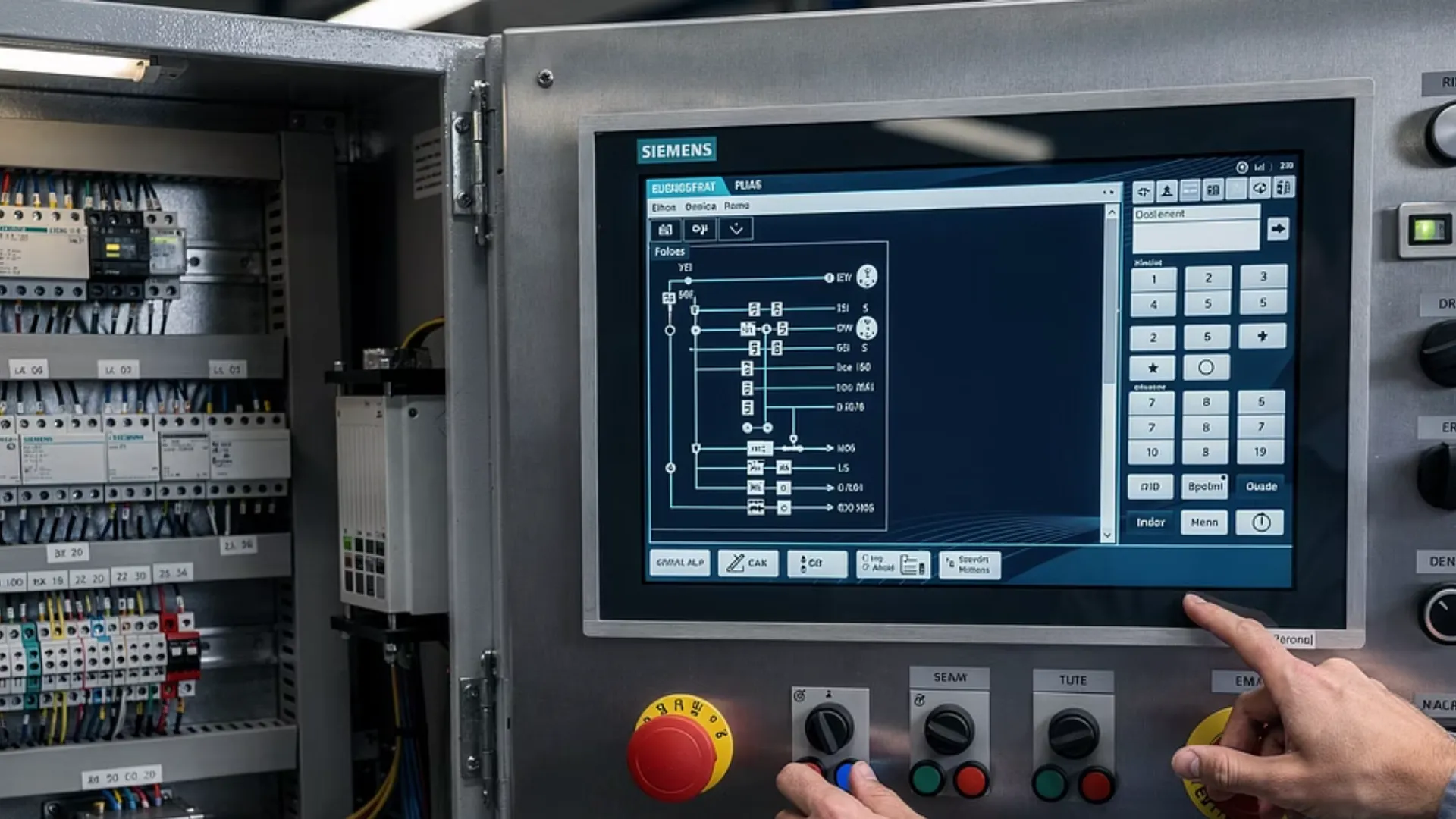
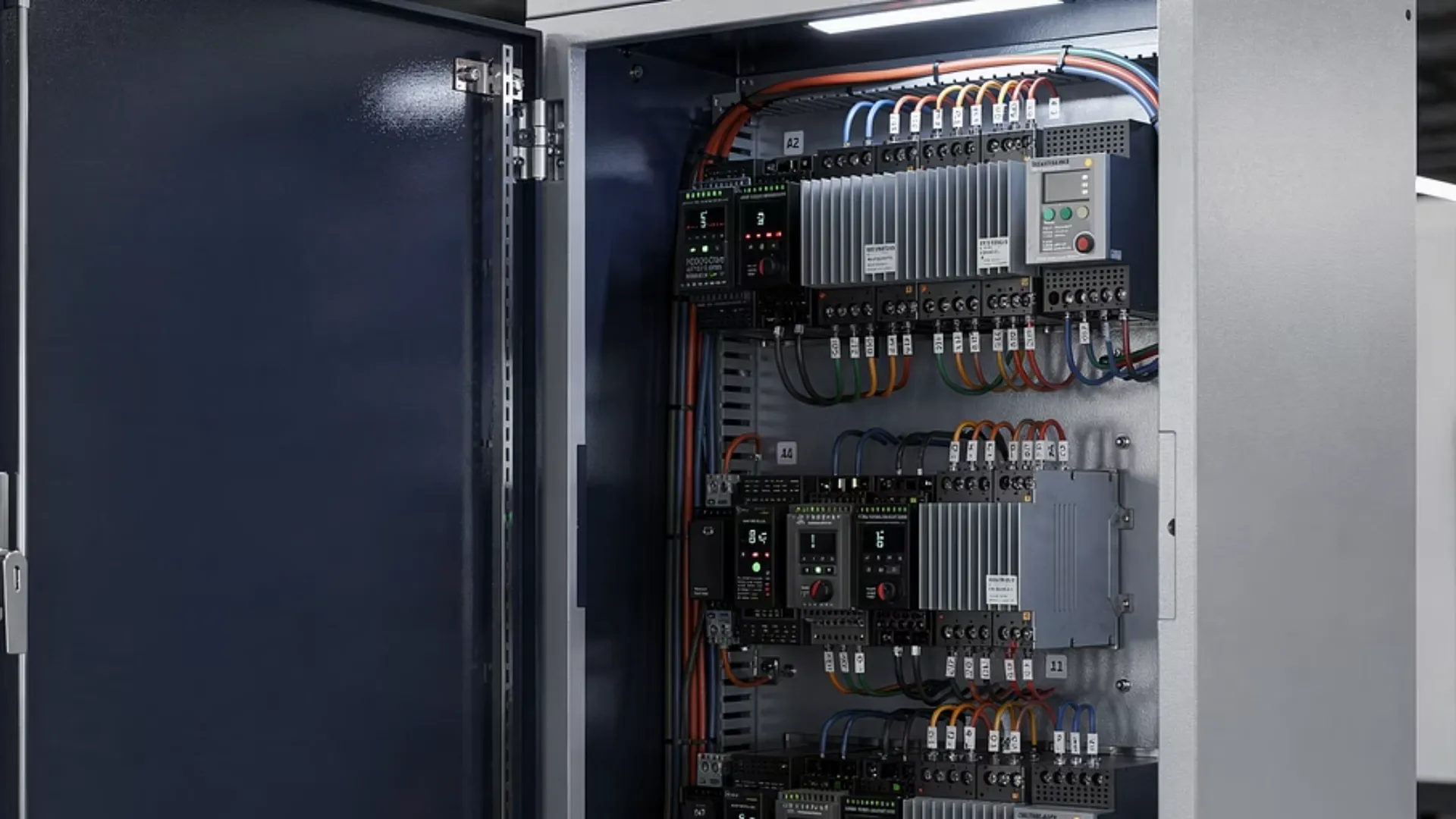
- 3.Cabling and [electrical panel](/en/noticias/cuadros-electricos-industriales): the servo drive is housed in the electrical cabinet alongside the PLC, protection devices and power supply. The cable run between drive and motor must meet shielding and maximum-length requirements to prevent interference.
- 4.Controller programming: the PLC governs motion profiles through the servo drive, managing positions, speeds, accelerations and synchronisations. At MECVIL we programme Siemens, Omron, Panasonic and Mitsubishi controllers.
- 5.Commissioning and tuning: servo autotuning, PID gain adjustment, verification of actual position and speed against the setpoint, and cycle-time optimisation.
This vertical integration is what distinguishes a special-purpose machinery manufacturer from an integrator that assembles third-party components. At MECVIL every phase is executed in-house within our 10,500 m² facilities, from conceptual engineering through to electromechanical assembly and commissioning.
Servo motors and VFDs at MECVIL
At MECVIL we have been designing and building special-purpose machinery for more than 50 years, serving sectors such as automotive, pharmaceuticals, food processing and heavy manufacturing. Servo motors and VFDs are fundamental components in the majority of our projects:
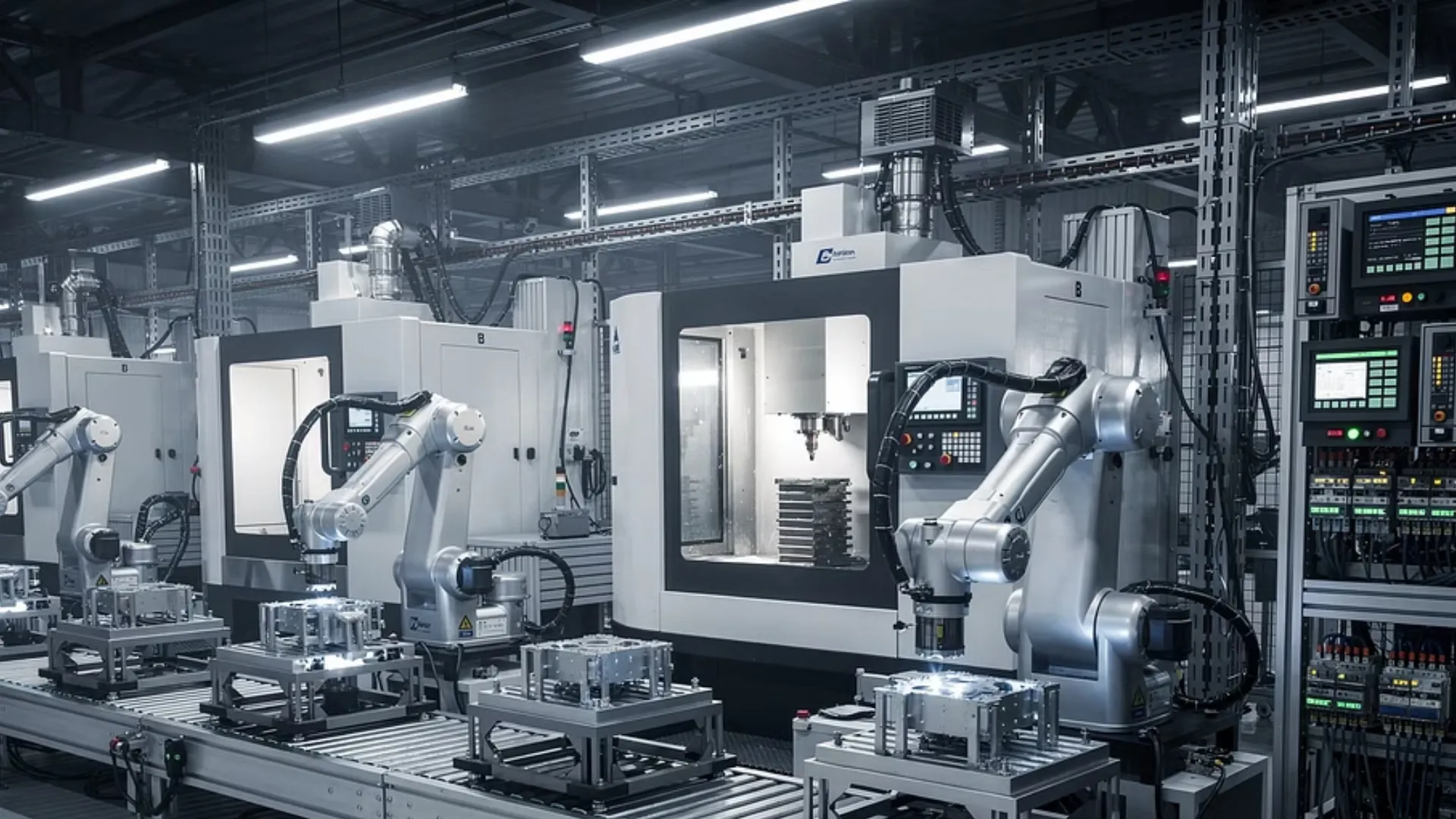
- Automated [assembly lines](/en/servicios/montaje): we integrate servo motors in positioning, dosing and high-throughput palletising stations, alongside ABB, DENSO and Universal Robots.
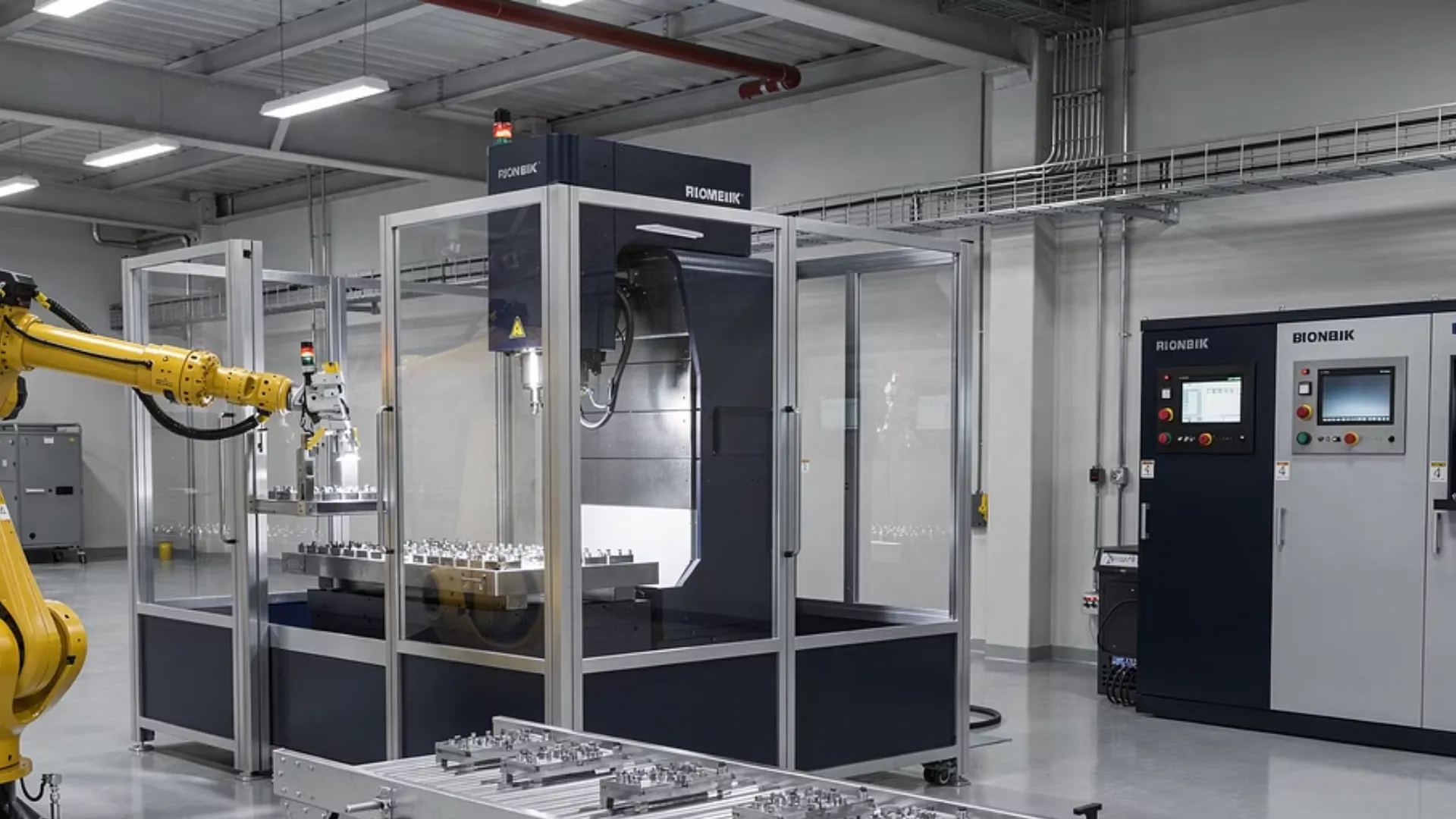
- Special-purpose [machining](/en/servicios/mecanizado) equipment: servo drives govern spindle, table and head axes in CNC machining centres with travels of up to 20 metres (SORALUCE FP20).
- [Turnkey 360 projects](/en/servicios/proyectos-globales): from concept to commissioning, we select the optimal drive technology for each application within the overall project.
- [Product industrialisation](/en/servicios/industrializacion): when a prototype transitions to series production, we resize the drives for real production throughputs and reliability targets.
Our team of over 110 professionals, including more than 30 engineers with an electrical engineering capacity of 1,500 hours per month, selects and programmes servo drives from the market-leading brands. We operate under ISO 9001 certification and hold the CEPYME500 seal.
For a deeper look at industrial automation and electrical panel integration, see our dedicated guides on industrial electrical panels.
Looking for a manufacturer that integrates servo motors and VFDs in your machinery under one roof?
At MECVIL we combine electrical, mechanical and control engineering to deliver bespoke drive solutions. Contact our technical team to discuss your project.