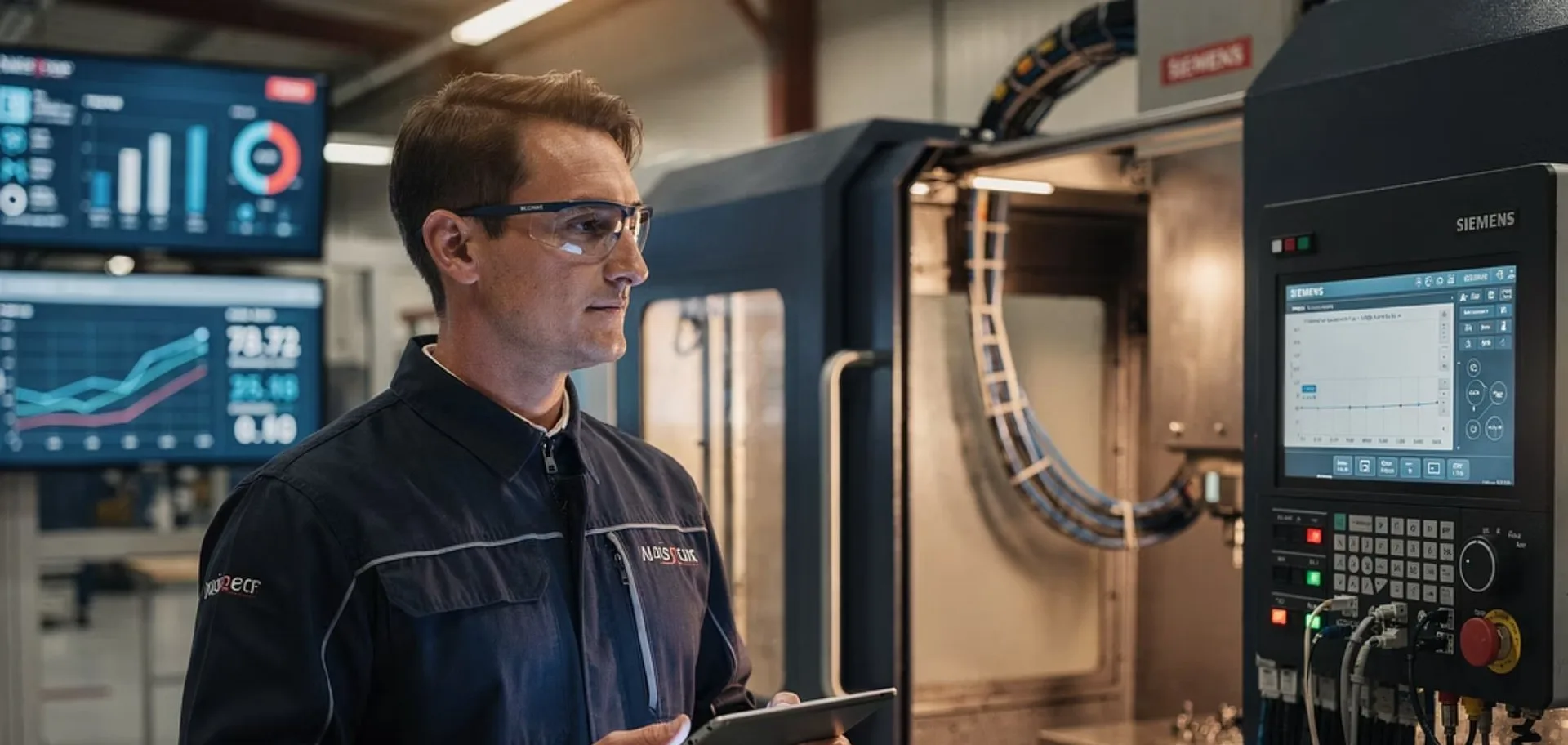
Industrial digitalisation in machinery manufacturing: a practical guide
What is industrial digitalisation?
Industrial digitalisation involves integrating digital technologies into every phase of the production process: from part design through to manufacturing, inspection and delivery. It is not about digitising documents or installing an ERP. It is about connecting data to the machine, the machine to the decision, and the decision to the result.
According to the VIII Smart Industry Report (2025), 72 % of Spanish industrial companies plan to increase their investment in Industry 4.0 technologies in the coming years. However, only 12.3 % of SMEs use artificial intelligence and 14.3 % employ Big Data for internal analysis (ONTSI, 2024). The intention to digitalise exists, but execution still lags behind.
At MECVIL we do not talk about digitalisation as a concept — we apply it every day in our engineering, CNC machining, assembly and automation processes. We have been manufacturing industrial machinery for 50 years, and digital tools are an integral part of how we work.
The 5 layers of digitalisation in manufacturing
Industrial digitalisation is not a single technology but a set of layers that are integrated progressively:
Digital design (CAD/CAM/FEA)
Everything starts with 3D design. At MECVIL we use 3D CAD software for mechanical design and FEA (finite element analysis) simulation to validate structures before manufacturing. Electrical schematics are designed in EPLAN and See Electrical, enabling automatic generation of bills of materials, wiring diagrams and technical documentation.
CAM (computer-aided manufacturing) translates the 3D model into toolpaths for CNC machining centres, closing the loop between what is designed and what is manufactured.
Plant control (PLC/HMI/SCADA)
The control layer is where data becomes action. PLCs (programmable logic controllers) execute each machine's control logic. HMI screens allow the operator to monitor and adjust parameters in real time. SCADA systems supervise the installation as a whole.
At MECVIL we programme PLCs from Siemens, Omron, Panasonic and Mitsubishi, with HMI interfaces from Siemens, Omron and Proface, adapting to each client's specifications. This is part of our electrical engineering service.
Intelligent inspection (machine vision and AI)
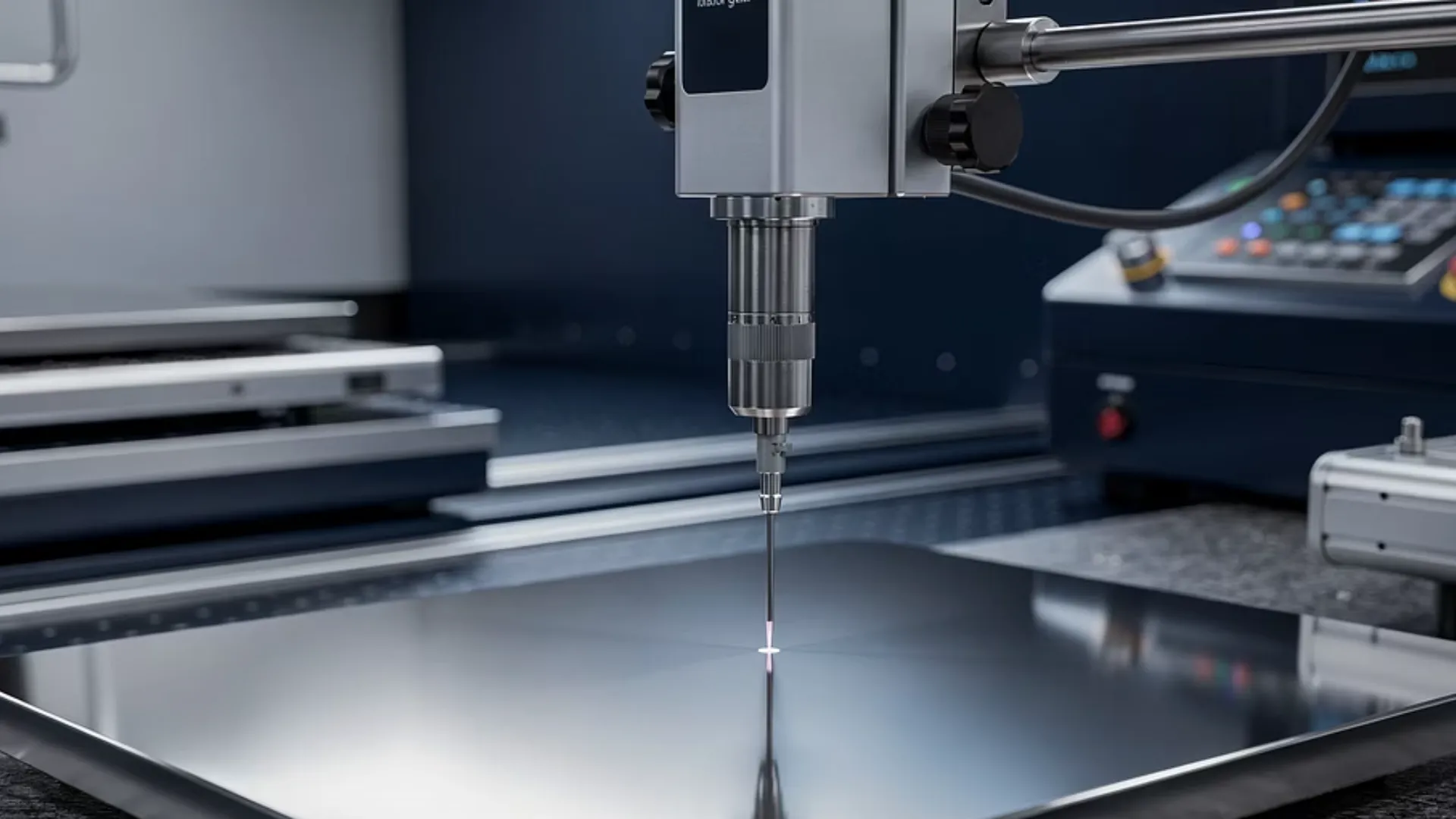
Automated verification using machine-vision systems makes it possible to inspect 100 % of production without relying on manual inspection. At MECVIL we have integrated inspection systems in real projects: AOI machines, electronic component verification on PCBs, 3D profilometry and laser marking with integrated verification.
These systems apply principles of industrial automation and connect to the PLC to reject defective parts in-line.
Looking to digitalise your production line?
At MECVIL we design and manufacture machinery with integrated digital technology. Get in touch with our team.
Connectivity (IoT and edge computing)
IoT sensors on CNC machines and production lines generate real-time data on temperature, vibrations, energy consumption and tool condition. Edge computing processes this data at the point of generation, without relying on the cloud, enabling reactions in milliseconds.
Our automatic stations with servomotors and regenerative braking energy recovery are an example of how intelligent electronics optimise energy consumption at machine level.
Enterprise integration (MES/ERP)
The top layer connects the shop floor with business management. MES (Manufacturing Execution System) platforms monitor production in real time, whilst the ERP consolidates costs, procurement and planning. The RAMI 4.0 reference architecture (based on the ISA-95 standard) provides the framework for connecting these layers coherently.
How does a machinery manufacturer digitalise?
The digitalisation of a special-purpose machinery manufacturer such as MECVIL takes place across two simultaneous dimensions:
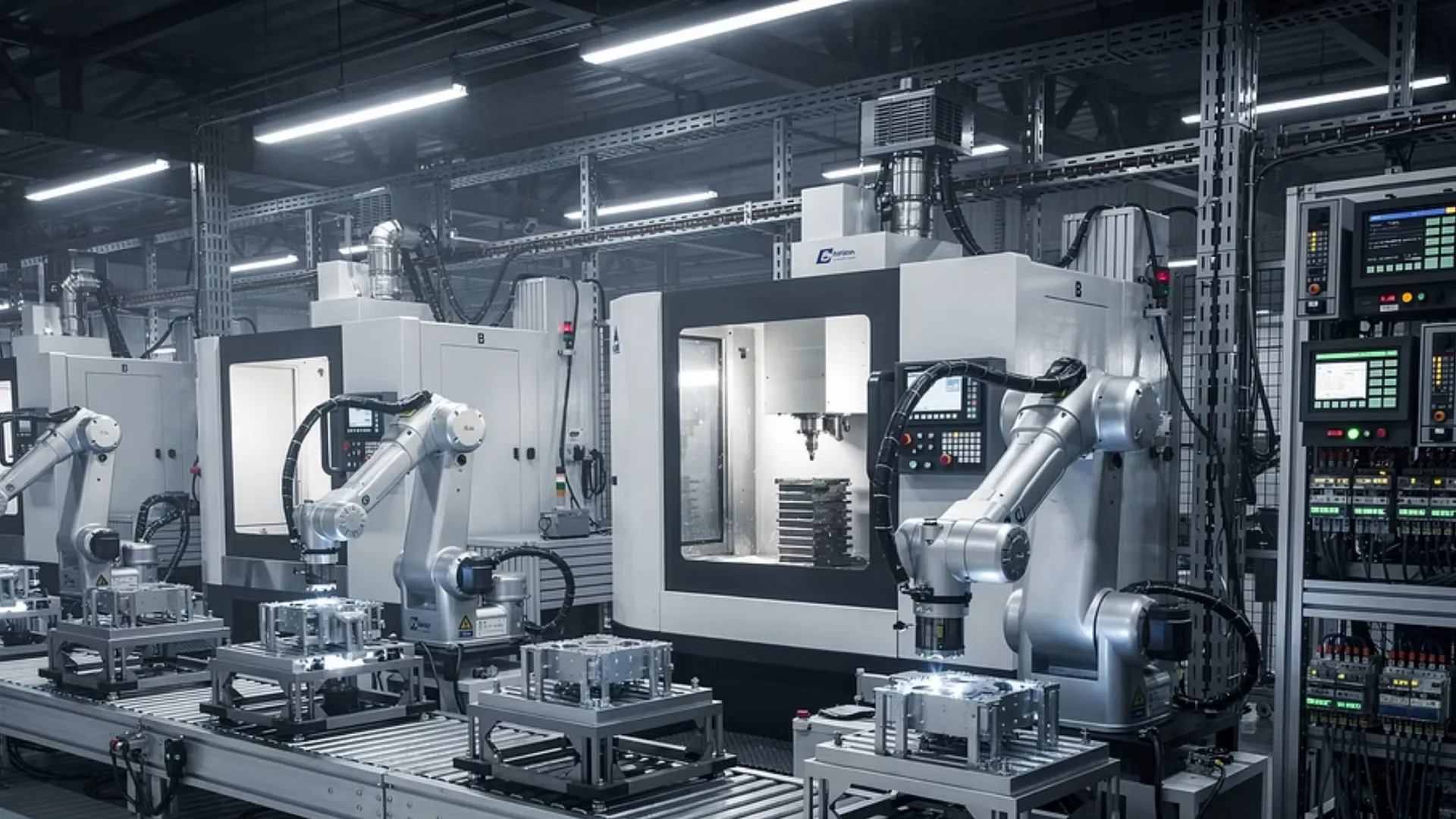
Product digitalisation (the machine we build): every project integrates PLCs, HMIs, industrial robotics, machine vision and traceability systems. Our FMS lines with up to 5 robots, machine vision and automatic fastening are inherently digital products.
Process digitalisation (how we build): from 3D CAD design through to CAM programming for CNC machining centres, schematic generation in EPLAN, dimensional control with coordinate-measuring machines, and project management with digital documentation.
This dual digitalisation — product and process — is what sets a manufacturer like MECVIL apart from a conventional workshop. We apply lean manufacturing principles so that technology eliminates real waste, rather than accumulating digital tools that nobody uses.
The ROI of industrial digitalisation
Sector data supports investment in digitalisation:
- Productivity: digitalised factories are up to 20 % more productive than conventional ones (Conasa, 2025)
- Profitability: manufacturers with digital maturity are 25 % more profitable than those still running 20th-century processes (Accenture)
- Adoption in Spain: 72 % of industrial companies plan to increase Industry 4.0 investment, driven by the EUR 3,300 million mobilised through PERTE funding and the new Industry Act 2025
- Barriers: the main obstacle is not technology but skilled talent — over 70 % of companies cite the shortage of specialised professionals as the greatest challenge (Metalindustria, 2025)
The key is to start where impact is measurable: a sensor on a bottleneck, a vision system on a manual inspection station, an MES connecting two machines that are currently isolated.
How to get started: practical steps for industrial SMEs
If you run an industrial SME and want to advance your digitalisation journey, these steps have proven effective:
- 1.Audit your current state: identify which processes are manual, which data is lost between departments, and where bottlenecks occur
- 2.Start with a pilot: choose a process with measurable impact (for example, digitalising quality control at a station using machine vision)
- 3.Connect design and manufacturing: if you design in CAD but programme the machine manually, CAM is the first link you need to connect
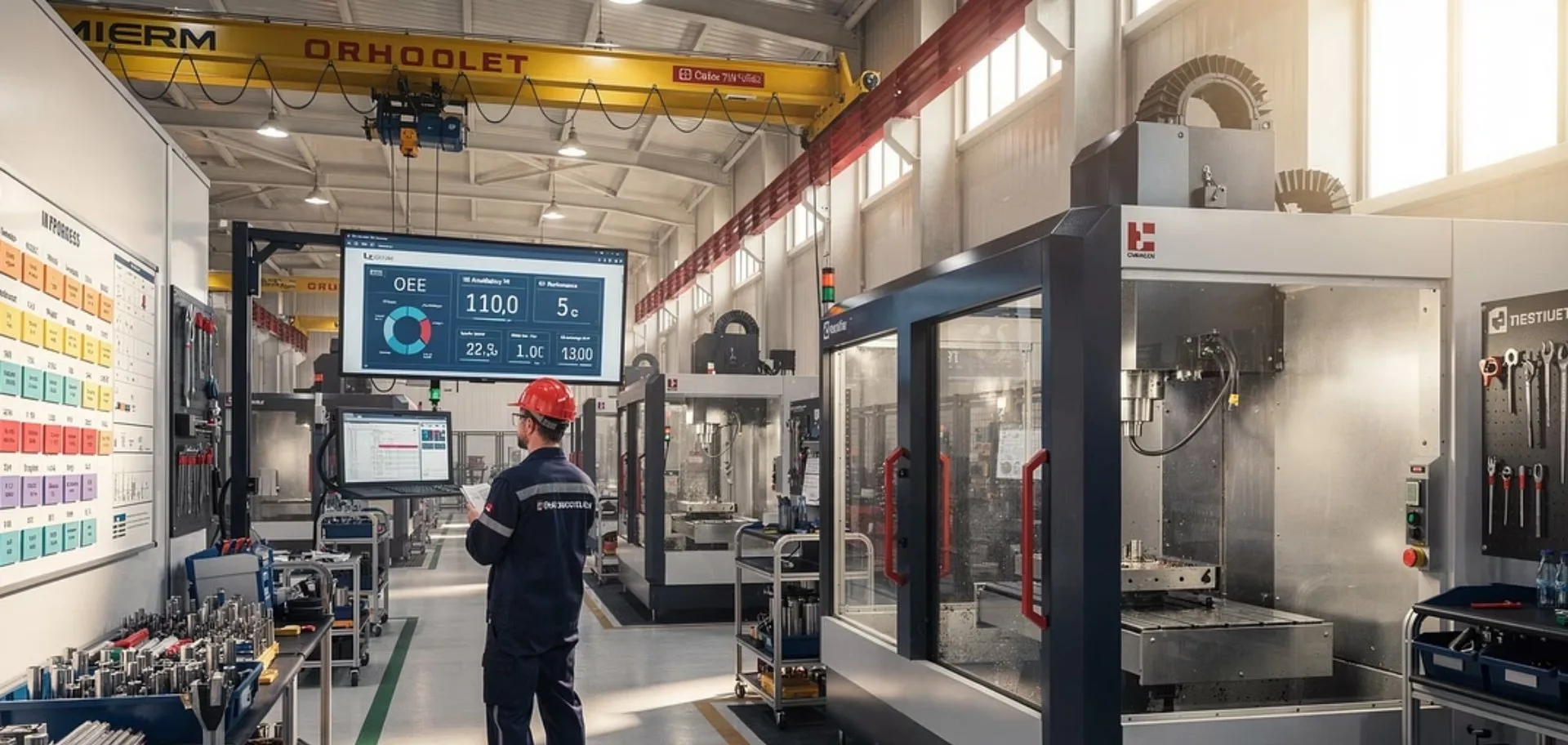
- 4.Instrument one machine: install IoT sensors on a critical piece of equipment and measure OEE for a month before deciding on the next investment
- 5.Find a partner with shop-floor experience: industrial digitalisation requires knowledge of the machine, not just software. A manufacturing partner already operating with these technologies will save you mistakes and time
At MECVIL, our 360° turnkey service includes the industrialisation of machinery with digital technology integrated from the design stage. Whether your project requires large-format CNC machining, robotic automation or electromechanical assembly, digitalisation is not an add-on — it is part of the process.
Need machinery with integrated digital technology?
At MECVIL we manufacture production lines with PLCs, machine vision, robotics and full traceability. Contact our technical team to digitalise your production with a manufacturer that has spent 50 years on the shop floor.