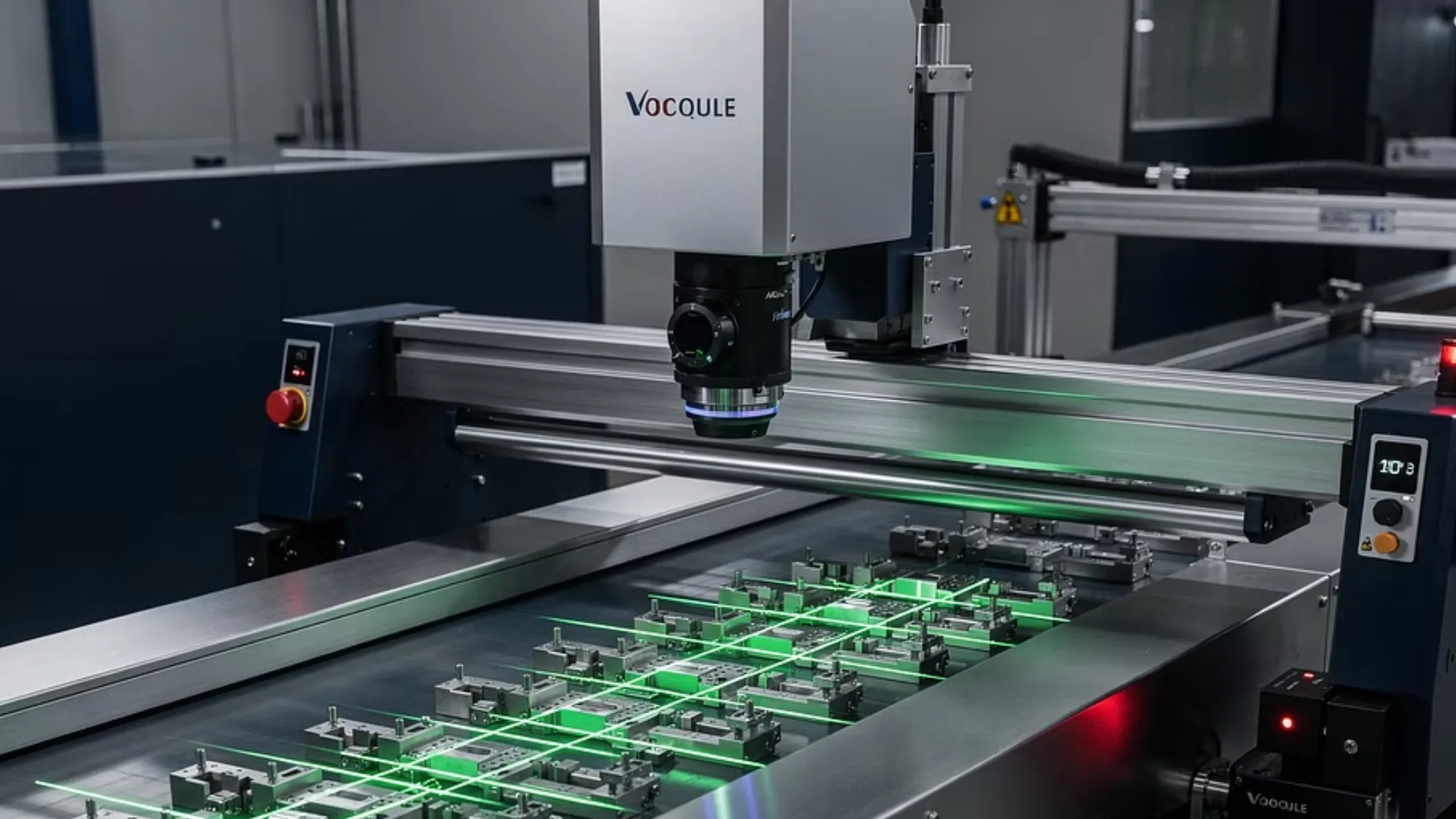
Industrial Machine Vision: Automated Inspection and Quality Control
What is industrial machine vision?
Industrial machine vision is the technology that enables machines to "see" and interpret images in order to make decisions within a manufacturing environment. A vision system captures images of parts, assemblies or processes and analyses them using algorithms that detect defects, verify dimensions, read codes and guide robots — all at speeds that human inspection cannot match.
The global industrial machine vision market reached USD 14 billion in 2024, with a compound annual growth rate (CAGR) of 7.7 % through to 2030 (Grand View Research, 2024). This growth reflects a clear need: manufacturers demand 100 % inspection of their output — not statistical sampling — and they need it without slowing down line speed.
At MECVIL we integrate machine vision systems as part of our electrical engineering and automation service. We work with Cognex systems featuring Deep Learning capabilities for automatic quality inspection on production lines that we design, build and commission.
Components of a machine vision system
An industrial vision system consists of five elements working together:
- Optics and cameras: capture the image of the part. Resolution, acquisition speed and sensor type (monochrome, colour, 3D) are selected according to the application. High-resolution cameras are used for electronic component inspection; 3D laser profilometers for dimensional measurement.
- Lighting: a decisive factor that is often underestimated. The correct lighting (diffuse, angled, backlight, structured) highlights the defects the camera must detect and eliminates reflections that cause false positives.
- Image processing: the software that analyses captured images. Classical algorithms (edge detection, pattern matching, dimensional measurement) are now complemented by Deep Learning models capable of classifying defects that traditional algorithms cannot resolve.
- Industrial communication: the system integrates with the line PLC via standard protocols (Profinet, EtherNet/IP, EtherCAT). Inspection results are transmitted in real time to accept or reject parts.
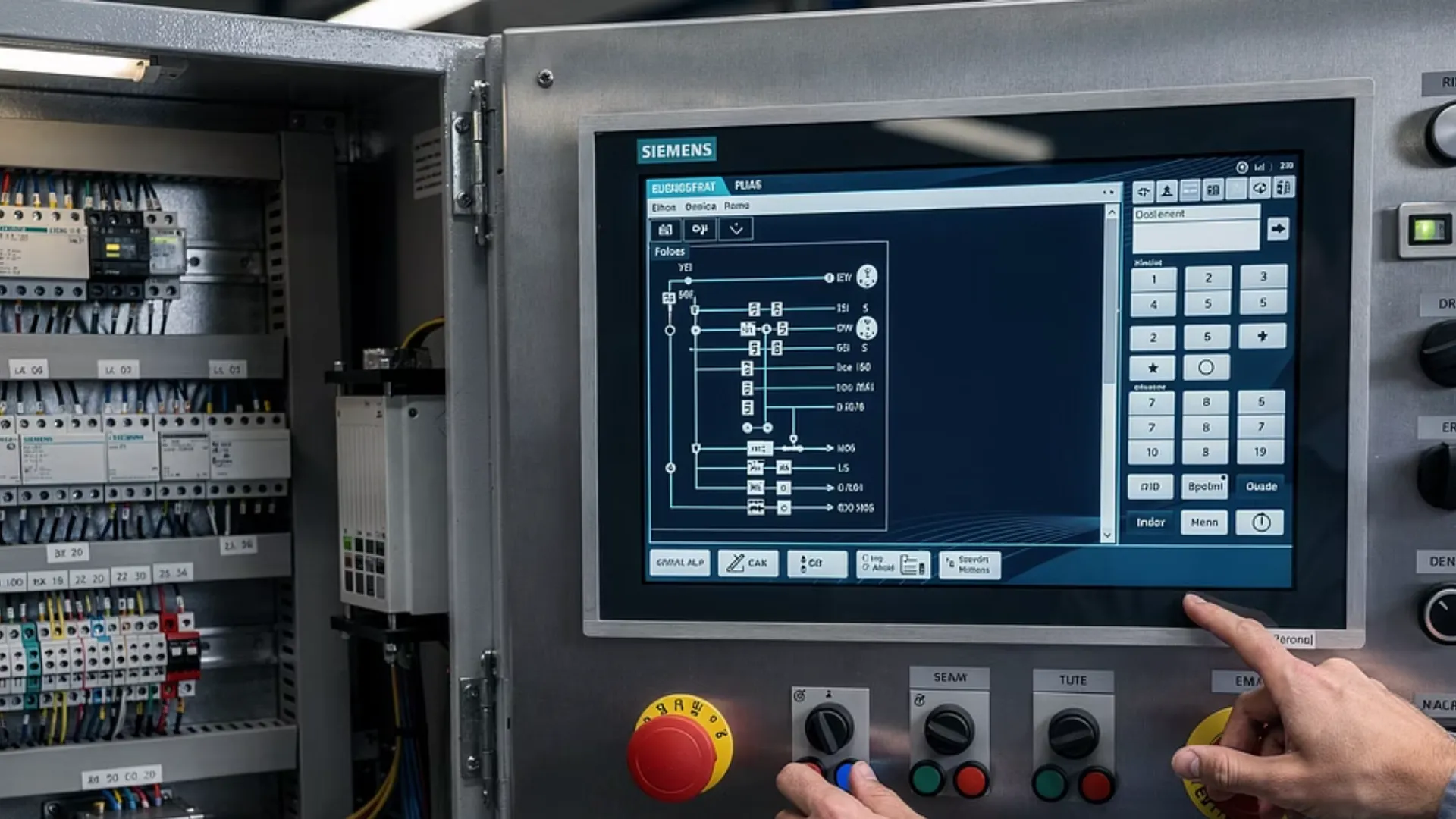
- User interface (HMI): screens that display inspection results, quality statistics and images of rejected parts to the operator, facilitating trend analysis.
The selection of each component depends on the specific application. There is no "universal" vision system: every project requires a bespoke design that combines optics, lighting and algorithms to solve the customer's particular problem. At MECVIL, machine vision is part of our broader industrial process automation strategy.
Quality control applications
Machine vision covers a broad spectrum of inspection and verification applications. These are the most common in industrial manufacturing:
| Application | Method | Industrial example |
|---|---|---|
| Presence/absence inspection | Component verification | Confirming all screws, seals or connectors are assembled |
| Dimensional measurement | Image or 3D laser calibration | Verifying critical dimensions without contact, at line speed |
| Surface defect detection | Texture and contrast analysis | Scratches, porosity, cracks on machined or cast parts |
| Code reading | OCR, DataMatrix, QR | Traceability of every part throughout the process |
| AOI (Automated Optical Inspection) | Multiple cameras + algorithms | PCB and electronic assembly inspection |
| Assembly verification | Comparison with reference model | Confirming an assembly is correctly put together before packaging |
At MECVIL we have integrated these applications in real industrialisation projects:
- AOI (Automated Optical Inspection): automatic inspection of components and assemblies without human intervention, integrated into assembly lines
- Electronic component verification on PCBs: equipment adaptable to any product type, detecting assembly errors before they progress down the line
- Laser marking with vision verification: integration of assembly, marking and verification in a single workflow
- 3D profilometry and 2D inspection camera: assembly monitoring with servo press, measuring force and position on every insertion
Do you need automated quality inspection on your production line?
At MECVIL we design and integrate bespoke machine vision systems. Speak to our technical team to evaluate your application.
When to implement machine vision
Investment in machine vision is justified when one or more of these conditions are met:
- 100 % inspection required: the end customer or regulations demand verification of every part, not statistical samples. This is standard in automotive, pharmaceutical and electronics sectors.
- Costly defects: the cost of an undetected defect (claim, customer line stoppage, product recall) far exceeds the investment in the vision system.
- High throughput: production speed makes reliable manual inspection impossible. Above 20–30 parts per minute, the human eye loses effectiveness.
- Inspector fatigue: repetitive visual inspection tasks over 8-hour shifts produce a defect escape rate that increases with time.
- Traceability: image and inspection result recording is required for every part, for audits or future claims.
The comparison between traditional (manual) inspection and machine vision is clear:
| Criterion | Manual inspection | Machine vision |
|---|---|---|
| Coverage | Statistical sampling | 100 % of production |
| Speed | 5–15 parts/min (depends on complexity) | 30–300+ parts/min |
| Consistency | Variable (fatigue, subjectivity) | Constant 24/7 |
| Traceability | Limited (manual records) | Automatic (image + data) |
| Cost per part | Decreases with volume, but has a floor | Decreases with volume, no floor |
| Subtle defect detection | Depends on the operator | Reproducible and configurable |
Machine vision with Deep Learning
Traditional vision algorithms (pattern matching, edge detection, geometric measurement) work well when the defect is clearly defined: a missing part, an out-of-tolerance dimension, an unreadable code. But when the defect is variable — irregular scratches, stains of different shapes, cosmetic defects that the human eye classifies "by judgement" — classical algorithms generate unacceptable false-positive rates.
Deep Learning applied to machine vision solves this problem. Instead of programming explicit rules, a model is trained with images of good and defective parts. The model learns to classify defects with the same logic as an experienced inspector, but with the consistency and speed of a machine.
At MECVIL we work with Cognex systems that integrate Deep Learning tools directly into the industrial vision environment. This enables:
- Defect classification: the model distinguishes between defect types (scratch, porosity, stain) and assigns severity
- Anomaly detection: it identifies parts that deviate from the normal pattern, even when the defect type was not anticipated
- False-positive reduction: the trained model tolerates the natural variability of parts (reflections, colour variations) without rejecting good parts
The combination of classical algorithms and Deep Learning is the most robust strategy: classical algorithms handle dimensional and presence checks, whilst Deep Learning tackles cosmetic defects and subjective classifications.
Integration into automated production lines
An isolated machine vision system has limited value. Its true potential emerges when it is integrated into an automated production line, forming part of a workflow where every station contributes information and makes decisions.
In MECVIL projects, machine vision integrates with:
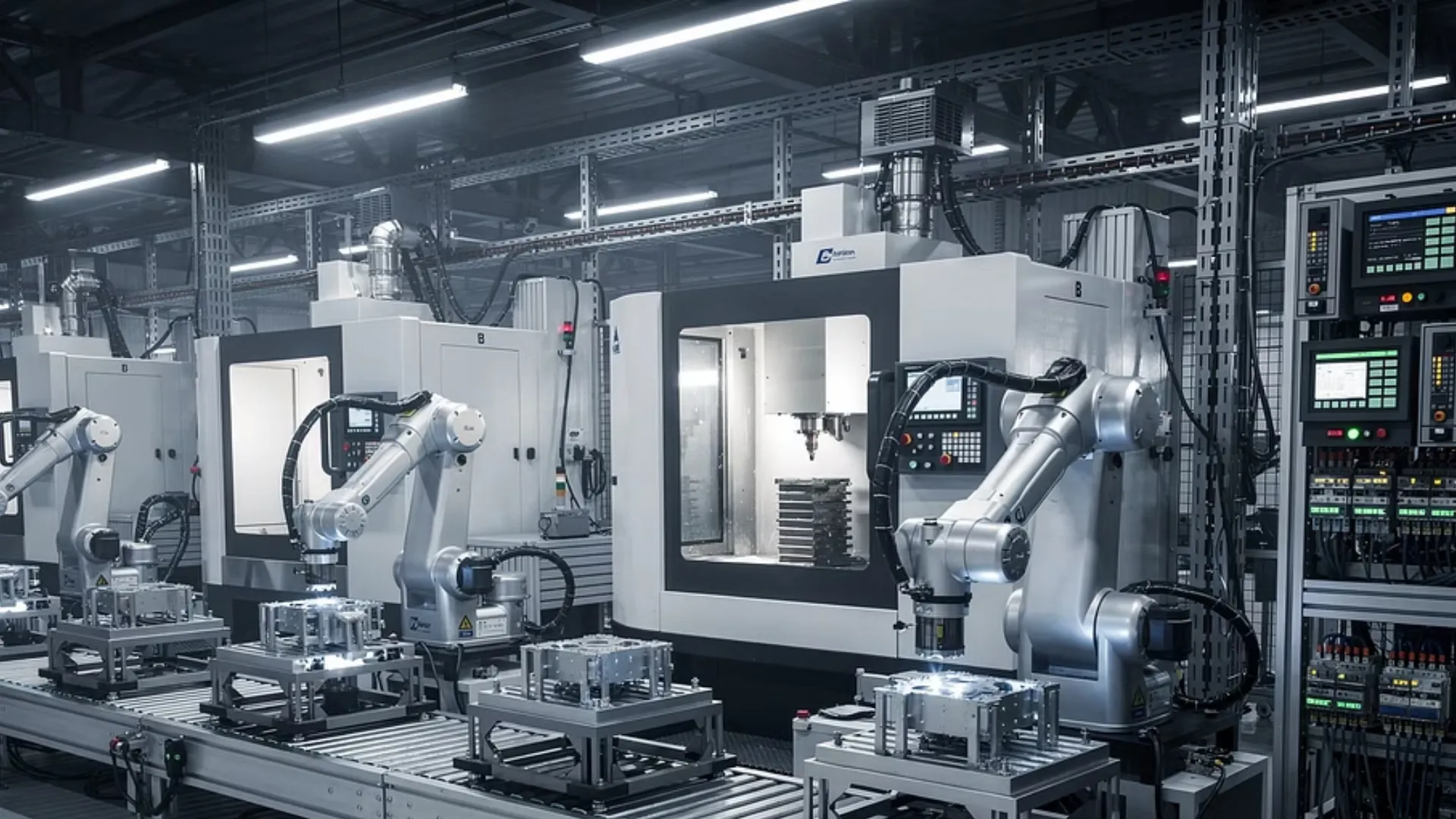
- Industrial robots (ABB, DENSO) and cobots (Universal Robots): the vision system guides the robot for precision pick & place, or the robot positions the part in front of the camera for inspection. On our FMS lines, robots and vision work in coordination for assembly, verification and sorting.
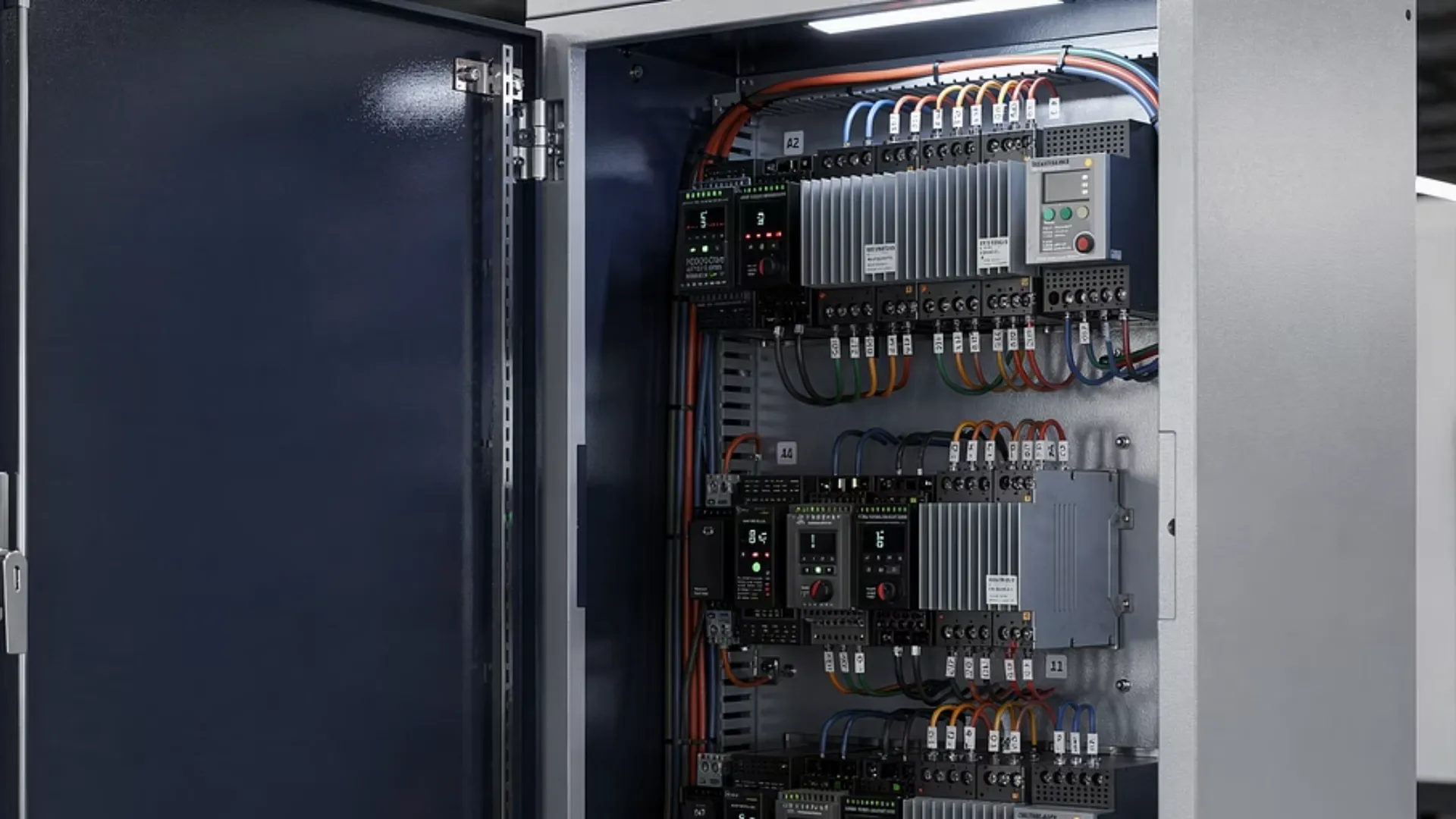
- PLCs (Siemens, Omron, Panasonic, Mitsubishi): the inspection result is communicated to the PLC in real time. If the part is rejected, the system diverts it automatically. If accepted, it continues to the next station. Our automation department programmes this control logic.
- Traceability systems: every inspected part is logged with its image, result and timestamp. This enables retrospective analysis, trend detection and response to claims.
- [Electromechanical assembly](/en/servicios/montaje): vision is installed at assembly stations to verify that each step has been executed correctly before advancing to the next.
This integration is possible because MECVIL approaches projects as a full-service machinery manufacturer: we design the mechanics, the electronics, the programming and the vision under one roof. We do not depend on third parties for any phase, which eliminates coordination problems between suppliers.
Our engineering department defines the system architecture from the concept phase, and the automation team brings it into real production.
Looking to integrate machine vision into your production line?
At MECVIL we combine 50 years of machinery manufacturing experience with Cognex vision technology and Deep Learning. Contact our team to analyse your application and define the best inspection strategy.