
Industrial electrical cabinets: types, components and custom manufacturing
What is an industrial electrical cabinet?
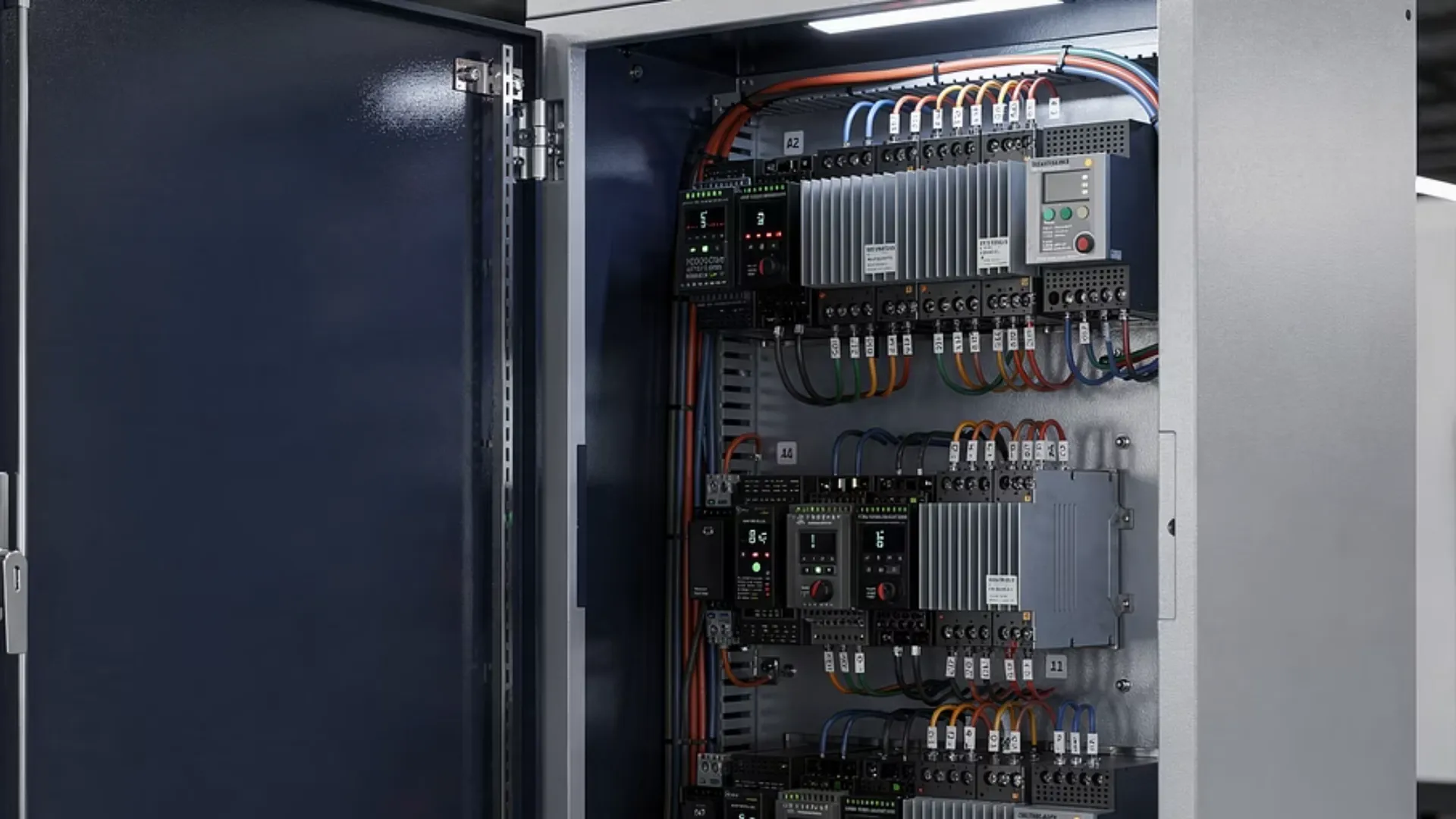
An industrial electrical cabinet (also known as an electrical enclosure or switchgear panel) is the housing that contains the power and control components of a machine or installation: PLC, variable frequency drives, contactors, protective devices, power supplies, terminal blocks and wiring. It is the nerve centre of any automated equipment: if the machine is the body, the electrical cabinet is the nervous system.
In special machinery manufacturing, the electrical cabinet is not a standard off-the-shelf component. It is designed and built to order according to the project specifications: required power, number of axes, communication protocols, environmental conditions and applicable regulations.
At MECVIL, our electrical engineering department designs and manufactures custom electrical panels as an integral part of every turnkey project. We use EPLAN and See Electrical for schematic design, and programme PLCs from Siemens, Omron, Panasonic and Mitsubishi according to each client's preferences.
Main components of an industrial electrical panel
A typical industrial electrical cabinet for special machinery contains:
Power components
- Main switch: isolator with door interlock for safe disconnection
- Variable frequency drives (VFD): speed control for asynchronous motors. At MECVIL we work with drives that include regenerative braking energy recovery
- Contactors and starters: motor and actuator switching
- Protective devices: circuit breakers, residual current devices and fuses sized to the load
- Power supplies: AC/DC conversion for control components (24 VDC typical)
Control components
- PLC (Programmable Logic Controller): executes the machine control logic. At MECVIL we programme Siemens (S7-1200, S7-1500), Omron, Panasonic and Mitsubishi
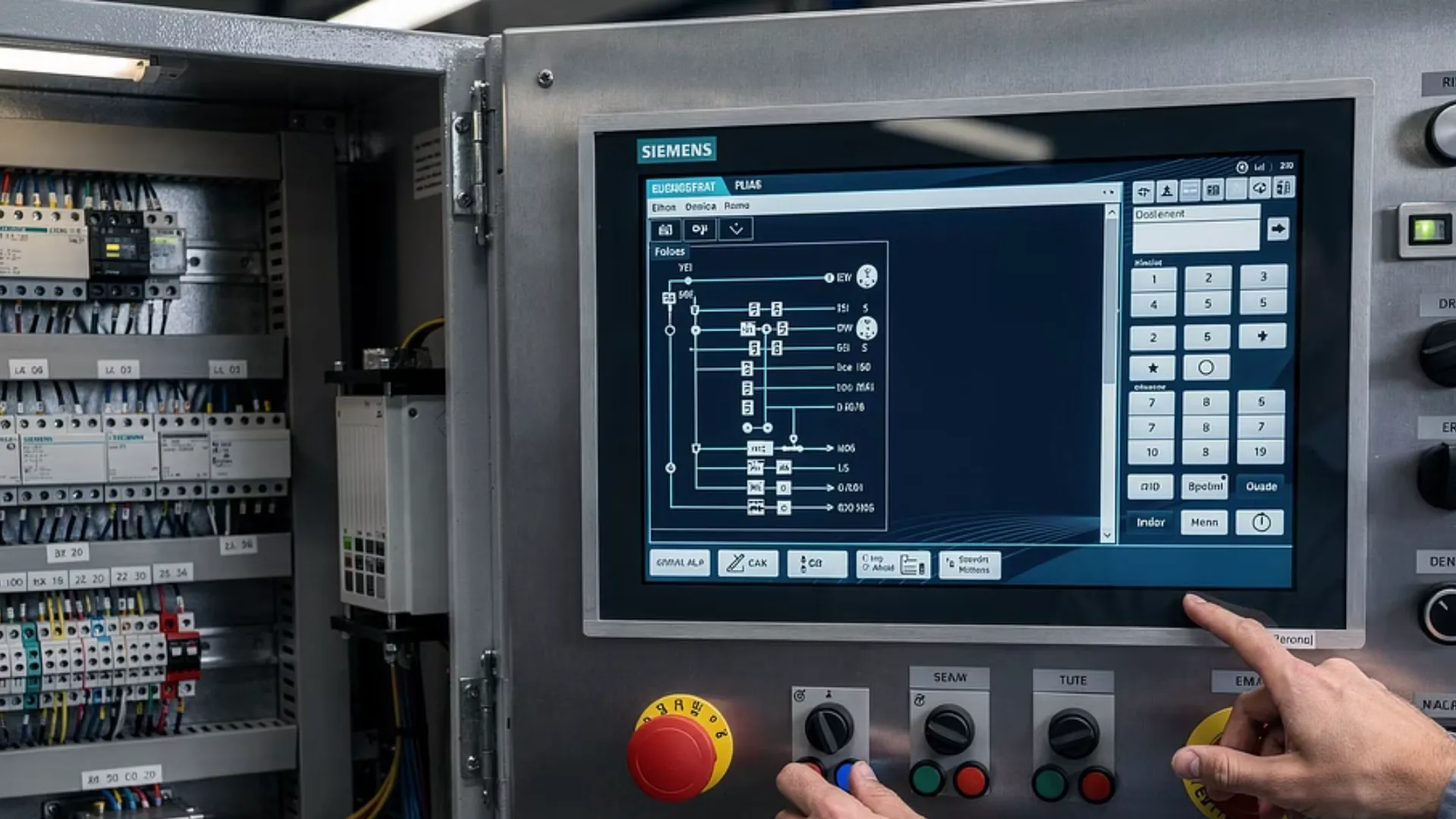
- [HMI (Human-Machine Interface)](/en/noticias/automatizacion-industrial-guia): touchscreen for monitoring and parameter adjustment. We work with Siemens, Omron and Proface
- I/O modules: digital and analogue inputs and outputs for sensors and actuators
- Distributed peripheral systems: fieldbus communication for large-scale installations
- Safety relays: emergency stop circuits, light curtains, two-hand controls
Connection elements
- Terminal blocks: interface point between the cabinet and the field (sensors, motors, valves)
- Cable ducts and trays: internal wiring organisation
- Cable glands: sealed cable entry into the cabinet maintaining the IP protection rating
Need custom electrical panels for your machinery?
At MECVIL we design and manufacture electrical cabinets with EPLAN and multi-brand PLC programming. Request a quotation.
IP protection ratings: what does your application need?
The IP (Ingress Protection, per IEC 60529) rating defines the cabinet's resistance to the ingress of solids and liquids:
| IP rating | Solids protection | Liquids protection | Typical application |
|---|---|---|---|
| IP54 | Dust (partial) | Splashes | CNC machining workshops |
| IP55 | Dust (partial) | Water jets | Food industry, frequent washdown |
| IP65 | Dust (total) | Water jets | Fine dust environments, covered outdoor |
| IP66 | Dust (total) | Powerful jets | Chemical plants, mines |
| IP67 | Dust (total) | Temporary immersion | Temporarily submersible equipment |
The IP rating selection affects the cabinet cost: higher protection requires higher-quality seals, cable glands and materials. In special machinery applications, ratings IP54 to IP65 cover the majority of requirements.
How is a custom electrical cabinet designed?
The design of an electrical cabinet for industrial machinery follows a systematic process:
- 1.Requirements definition: total power, number of motors/axes, sensors, communication protocols (Profinet, EtherCAT, Modbus), IP rating, applicable regulations
- 2.Electrical schematic: design in EPLAN or See Electrical with automatic bill of materials, power, control and safety schematics
- 3.Component selection: sizing of protective devices, drives, PLC and modules according to the calculated load. Enclosure selection (painted steel, stainless steel, polyester) according to the environment
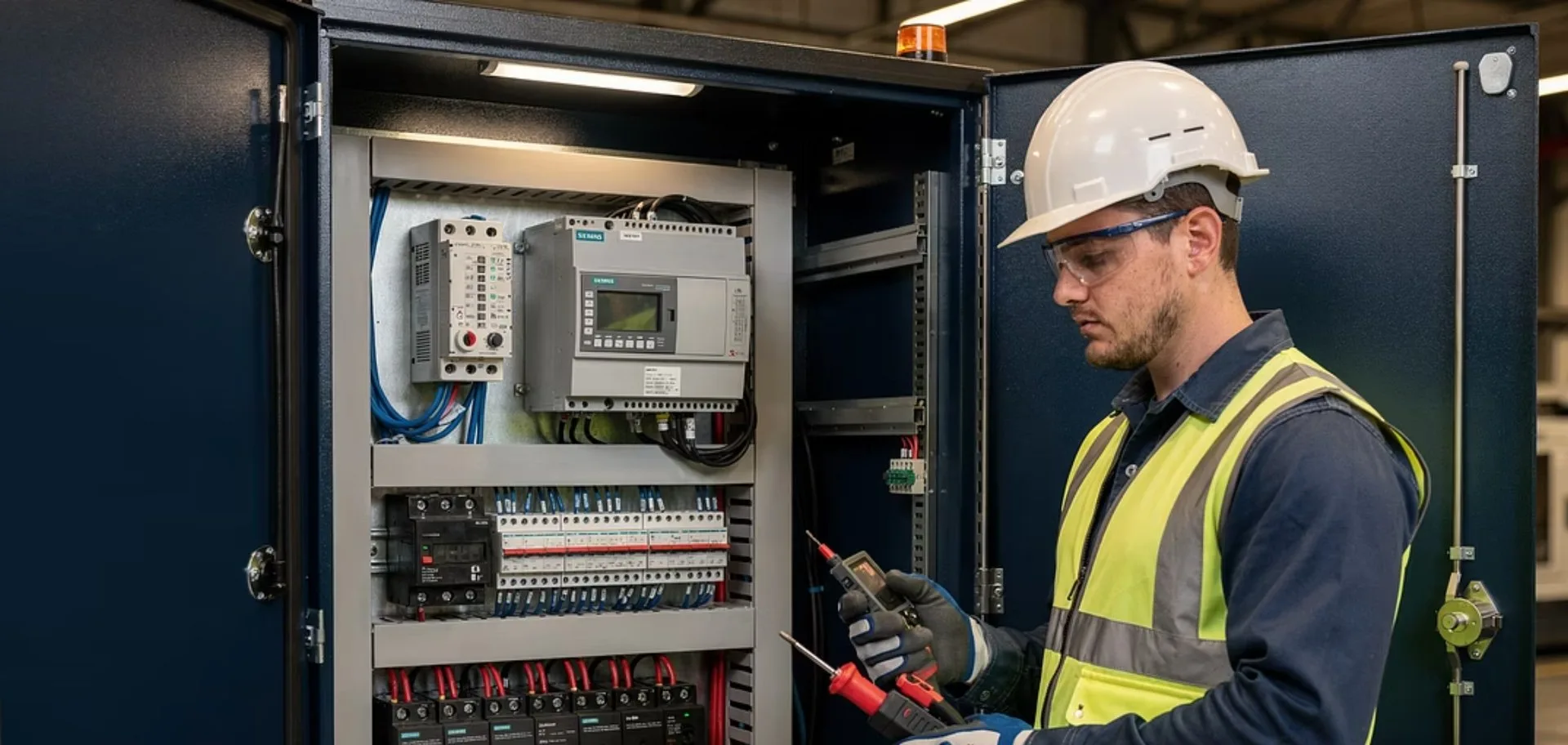
- 4.Panel build: component mounting on the back panel, wiring to schematic, terminal and cable identification
- 5.[Programming](/en/servicios/electrica): PLC, HMI, drives and communications. Functional bench testing before installation on the machine
- 6.Machine integration: connecting the cabinet to the field (motors, sensors, robots, machine vision systems)
At MECVIL, this process is integrated into our electromechanical assembly workflow. The same team that designs the schematic in EPLAN programmes the PLC and carries out commissioning, eliminating interpretation errors between departments.
Regulations applicable to industrial electrical panels
Industrial electrical cabinets for machinery must comply with the following standards:
- IEC 61439: low-voltage switchgear and controlgear assemblies. Defines design, manufacturing and verification requirements
- IEC 60204-1: safety of machinery — electrical equipment of machines. Establishes requirements for the electrical part of machines
- IEC 60529: IP protection ratings for enclosures
- [Machinery Directive 2006/42/EC](/en/noticias/directiva-maquinas-marcado-ce) (and new EU Regulation 2023/1230 from 2027): the electrical cabinet is part of the machine and must meet the essential safety requirements
- EN ISO 13849 / EN 62061: safety circuit requirements (Performance Level / SIL)
At MECVIL, our [ISO 9001](/en/empresa) quality management system ensures full traceability for every panel manufactured, from schematic to test protocol. We also apply certified welding for metal structures, so the enclosures and frames that may house the machinery are fabricated under the same quality control.
The electrical cabinet within a turnkey project
In a turnkey project for special machinery, the electrical cabinet is not an isolated component. It is integrated into a broader workflow:
- Engineering defines the electrical requirements based on the production process
- CNC machining manufactures the machine beds and tooling
- Welding builds the structures
- The electrical department designs, builds and programmes the cabinet
- Assembly integrates everything into the final machine
- Commissioning validates the complete system, including safety functions
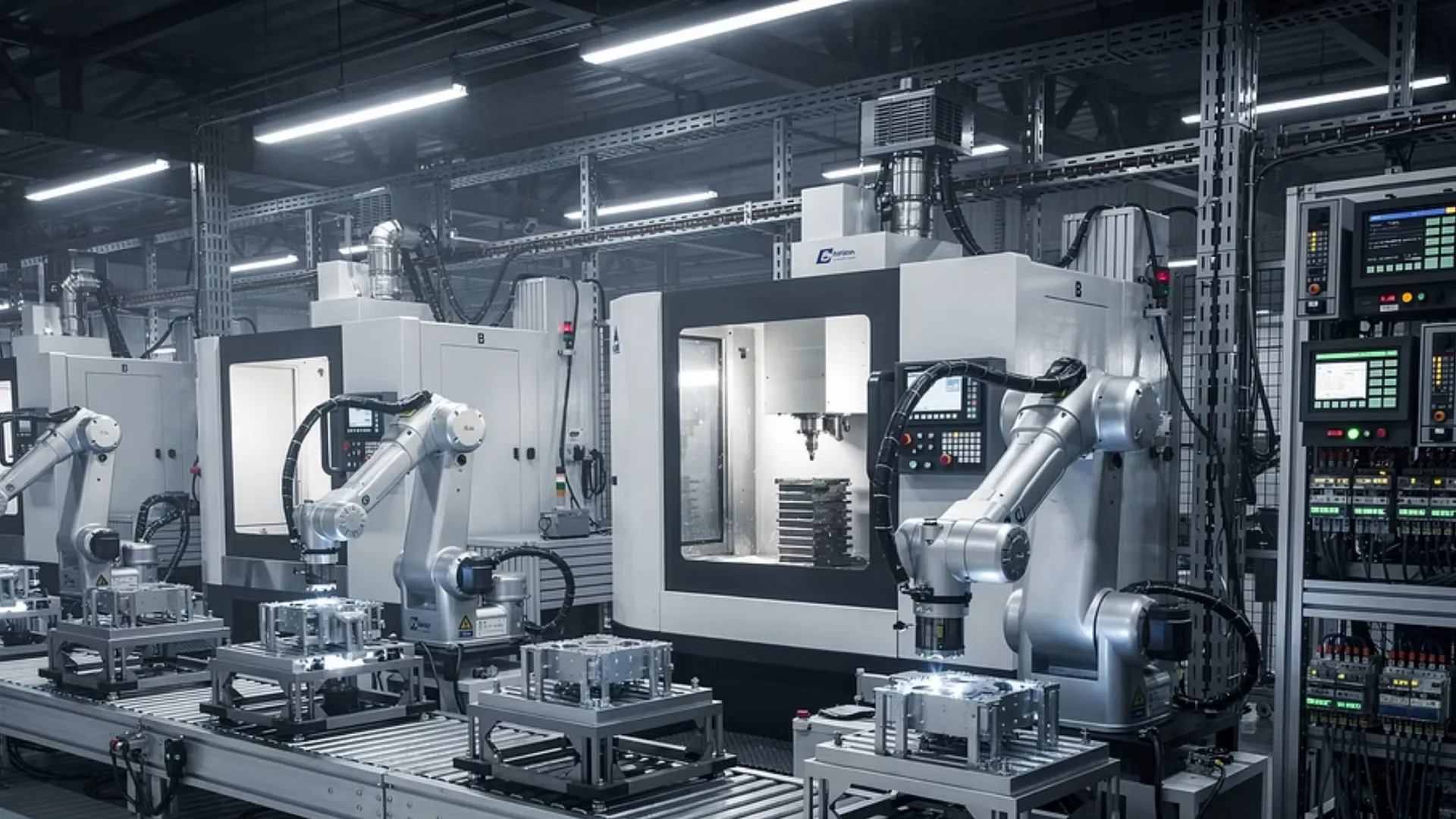
At MECVIL, these phases are carried out in our 10,500 m² facilities with a team of +110 professionals. Our FMS lines with up to 5 robots and machine vision demonstrate the complexity of the electrical cabinets we design: multiple servo axes, distributed communications, camera integration and dimensional control systems.
We apply lean manufacturing principles in the organisation of our electrical workshop: 5S in the wiring area, project-based material preparation and standardised wiring practices to reduce errors and assembly times.
Looking for a manufacturer that designs, builds and programmes electrical cabinets integrated into complete machinery?
At MECVIL we combine electrical engineering (EPLAN), multi-brand PLC programming and turnkey assembly under one roof. Contact our technical team.